
Reliable Deployment Strategy
We design deployment automation that accounts for your specific application architecture, environment constraints, and rollback requirements—producing pipelines that behave predictably under real-world conditions.
Replace slow, manual release processes with automated delivery pipelines that ship reliable software faster, reduce deployment failures, and give your engineering teams the confidence to release frequently.
From code commit to production deployment—faster, safer, and without the manual overhead.

Automated integration and testing pipelines that validate every code contribution against defined quality criteria immediately, surfacing defects at the moment they are fastest and cheapest to resolve.

Automated deployment pipelines that move validated software to production reliably and on demand, eliminating the manual steps where most deployment failures originate.

Integrated test suites embedded within the delivery pipeline that verify software quality, functionality, and regression exposure with every code change—before any human signs off on a release.

Scripted, version-controlled deployment procedures that execute consistently across environments—eliminating the configuration drift and manual errors that cause production failures.

Version-controlled infrastructure definitions that provision environments reproducibly, ensuring that the infrastructure your code runs on in production is identical to the environment it was tested in.

Assessment and restructuring of existing pipelines that have grown slow, brittle, or complex—recovering deployment speed, reducing failure rates, and aligning delivery capabilities with current business requirements.
Manual releases create delays, coordination overhead, and higher production risk. When large batches of changes are deployed at once, releases become harder to diagnose and rollbacks become slower and more expensive.
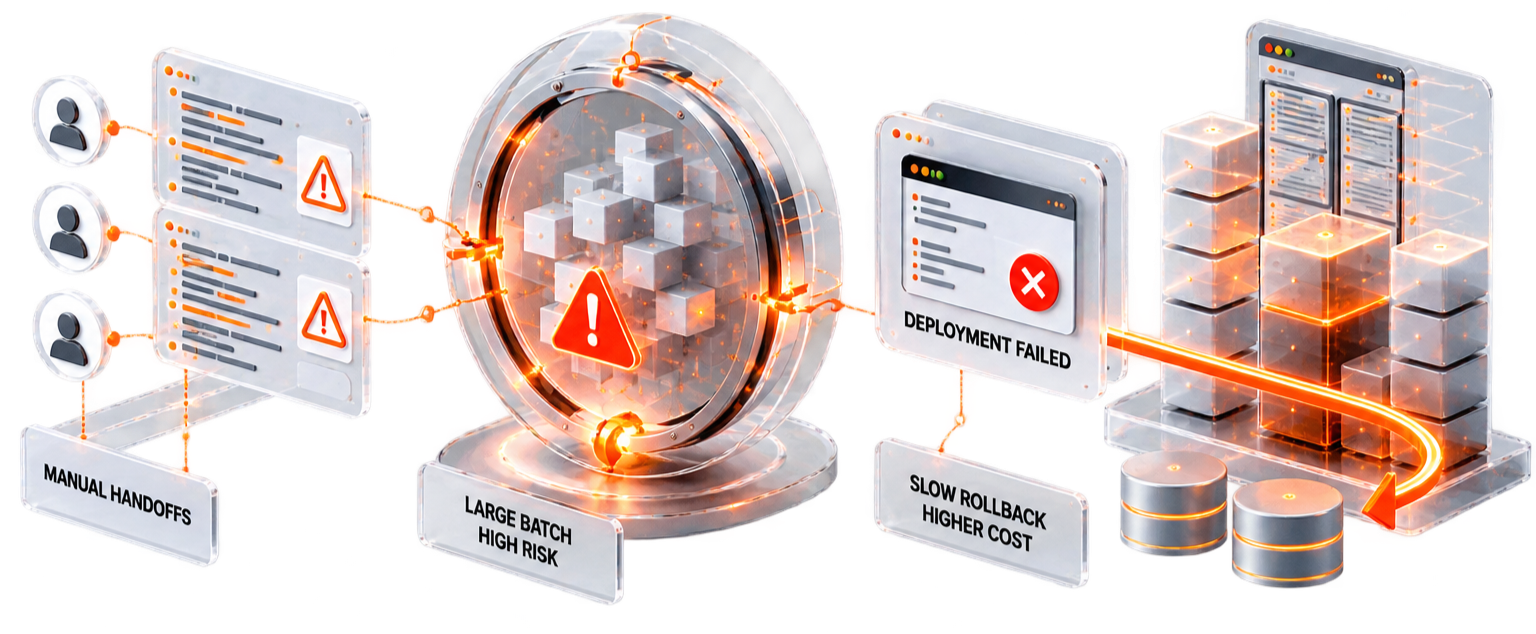
A connected CI/CD journey that breaks the cycle of painful releases and builds a secure, fast, and dependable software delivery system.
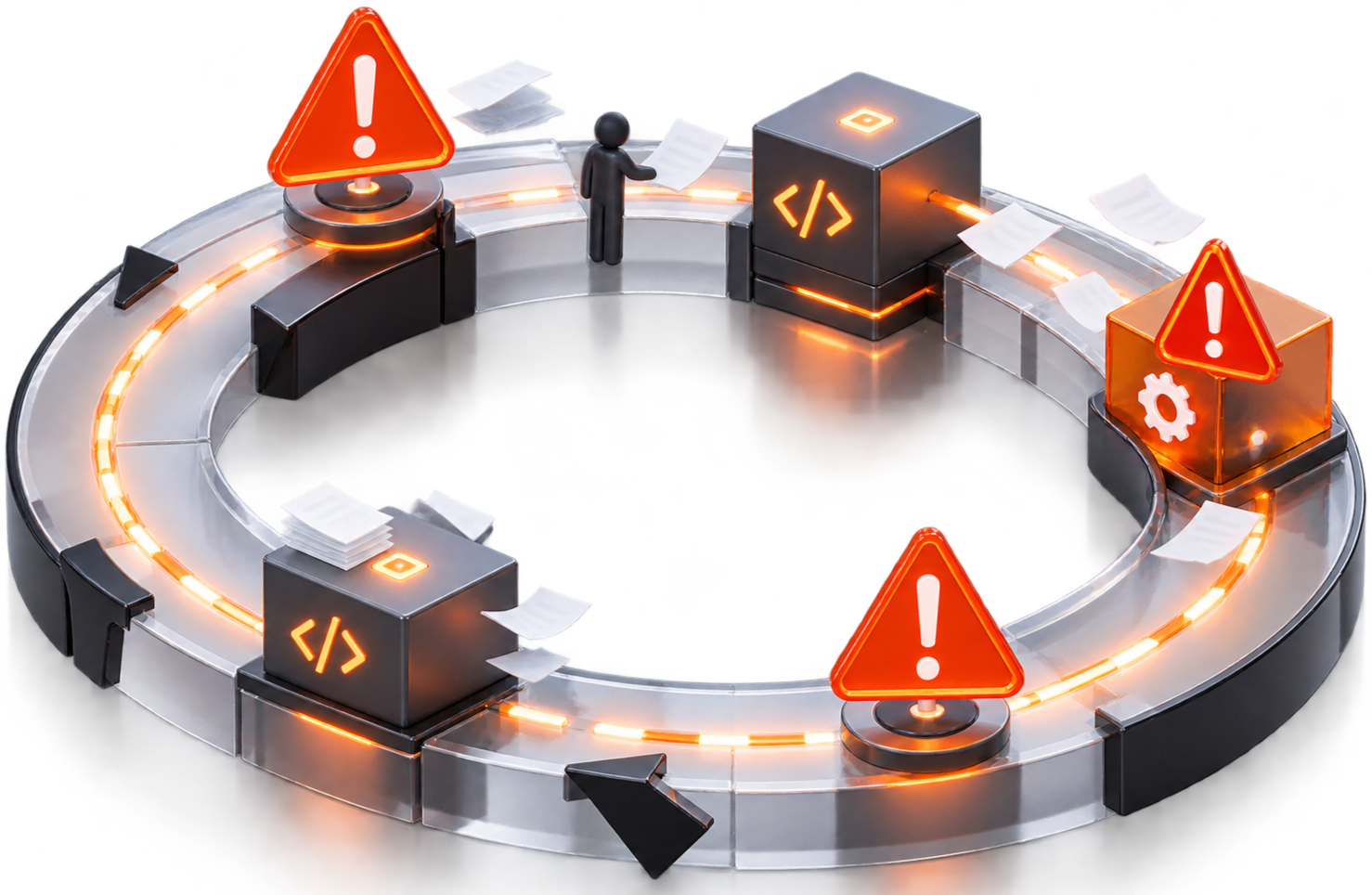
Without automated delivery, teams often delay releases and bundle changes together. This makes each deployment larger, riskier, and more difficult— creating a cycle that slows software delivery.
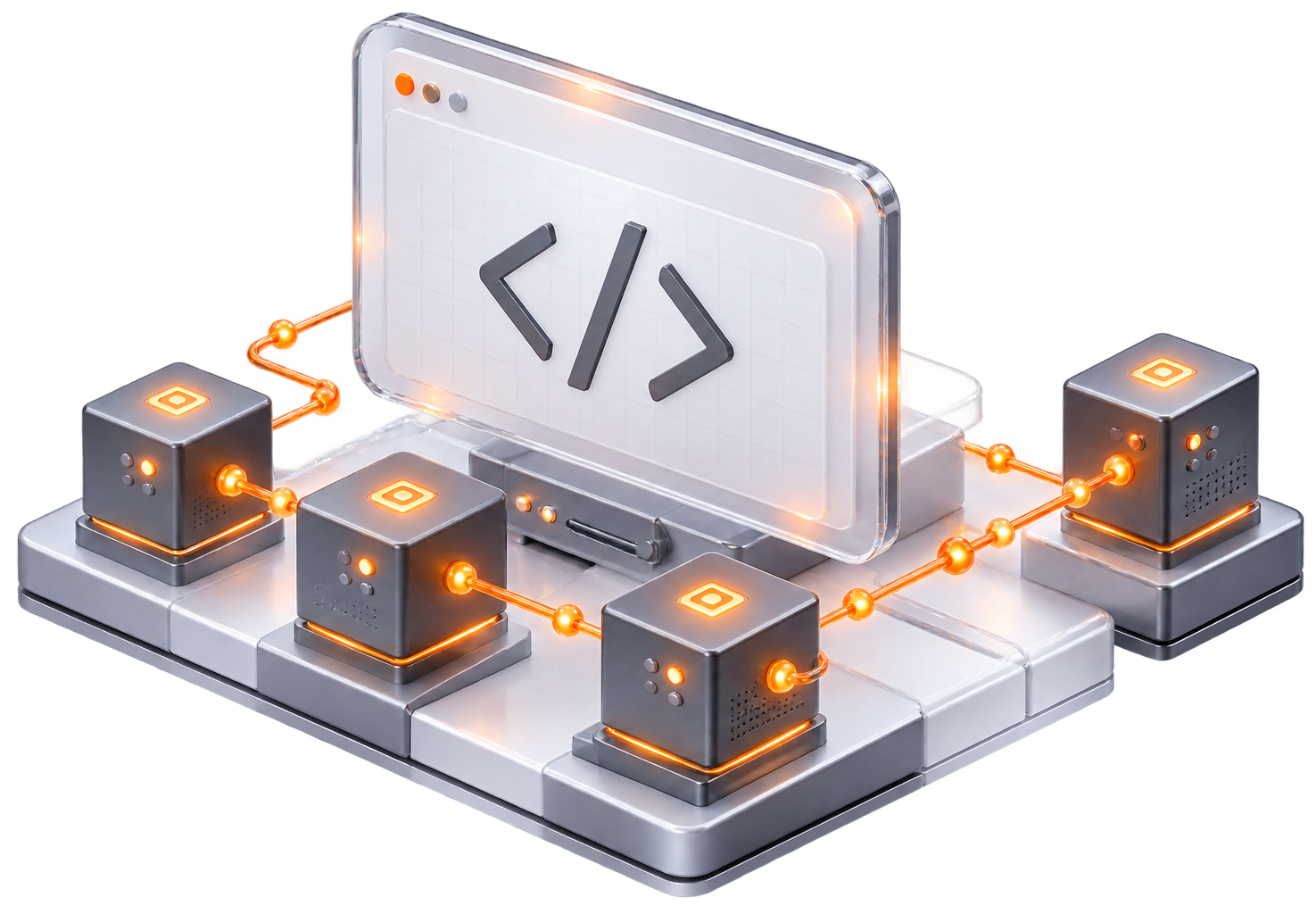
Continuous Integration and Continuous Delivery (CI/CD) automate testing, validation, and deployment so code moves through consistent, repeatable stages. This enables frequent releases, faster feedback, and greater production confidence.
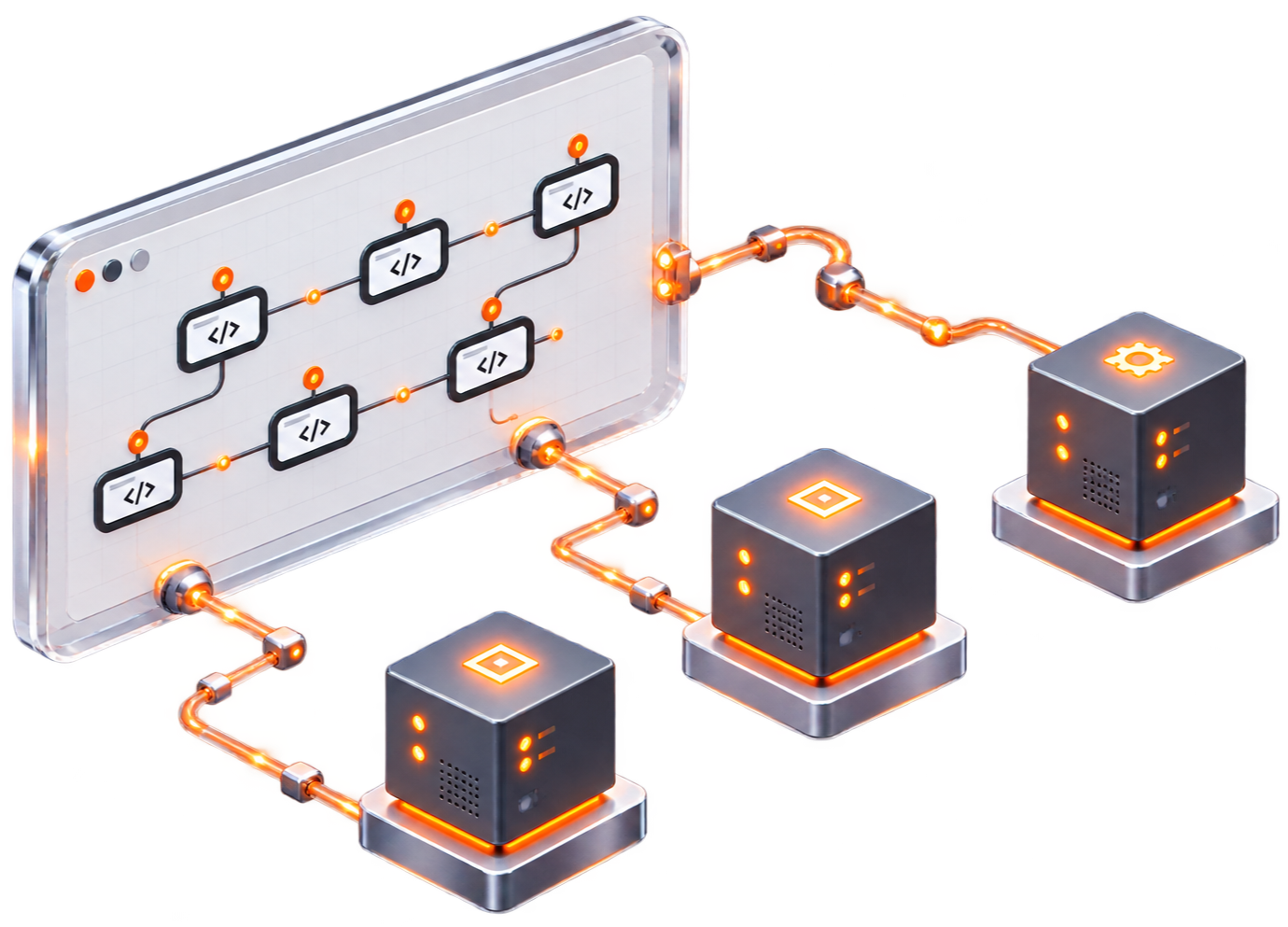
We analyze your current delivery process to identify manual delays, testing gaps, and coordination issues. We then build a CI/CD pipeline around your existing workflow, technology stack, and business requirements.
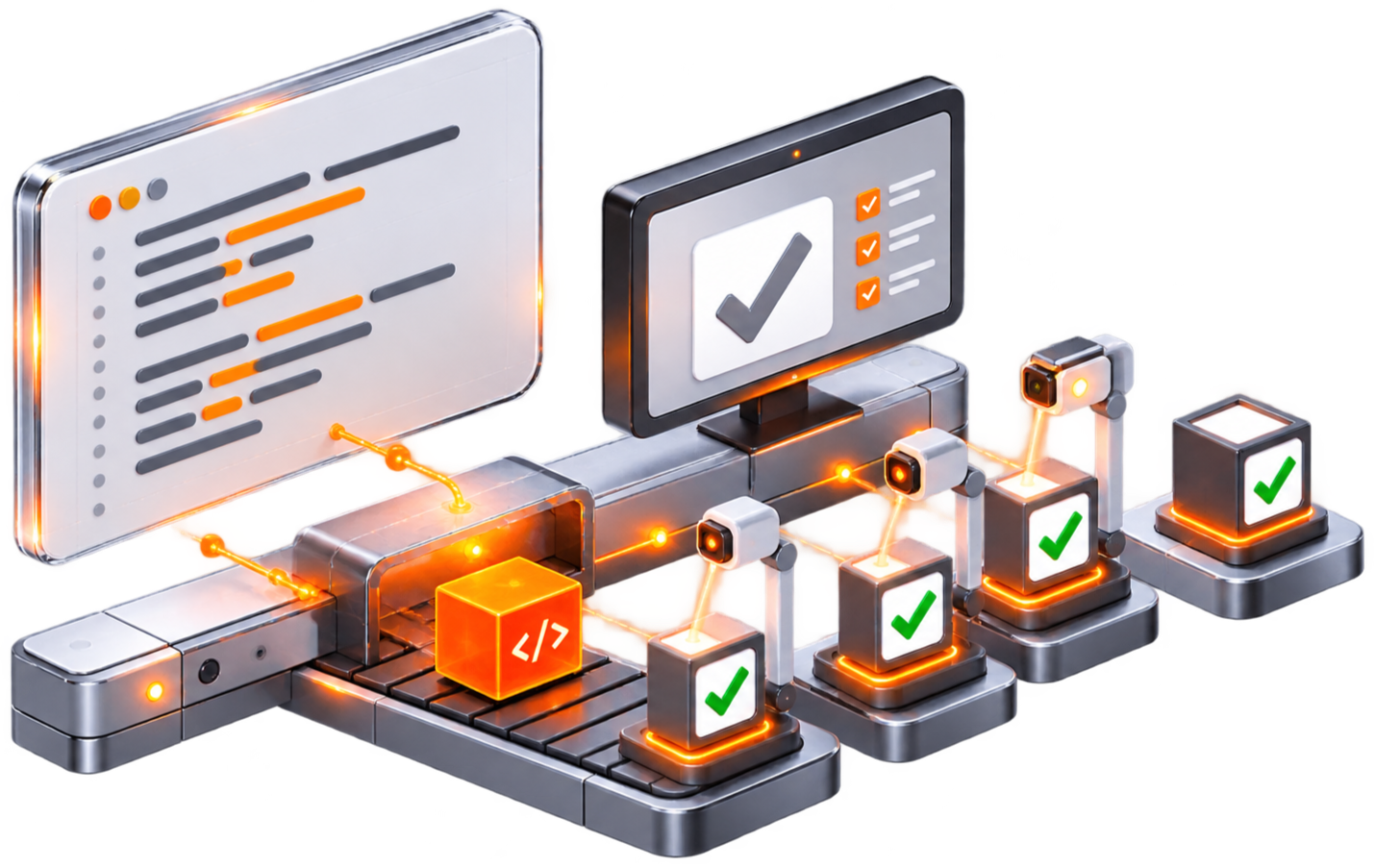
Continuous Integration automatically merges, tests, and validates code changes as they are introduced. Problems surface early, when they are easier and less costly to resolve, while automated testing maintains consistent quality standards.
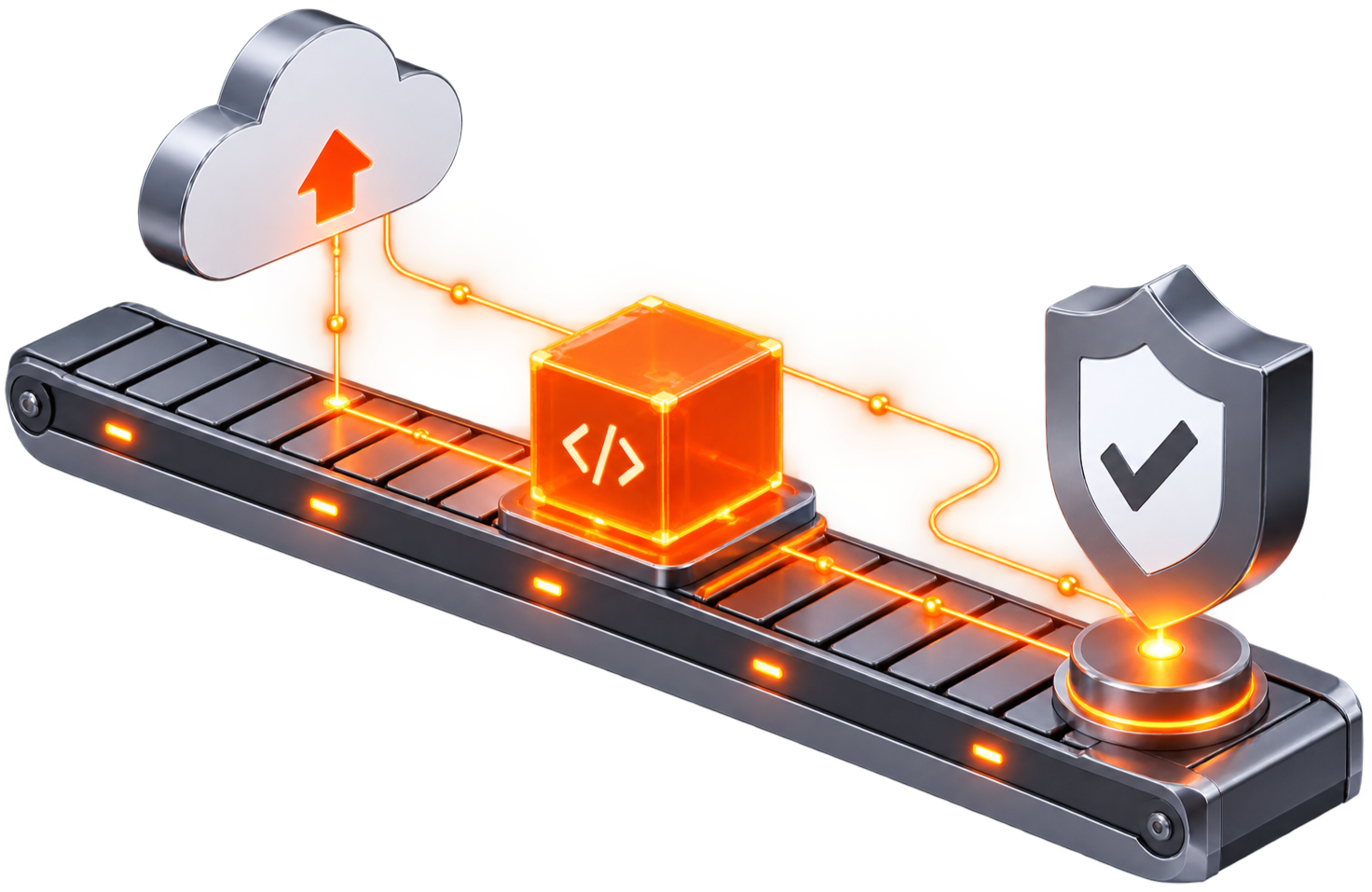
Continuous Delivery ensures tested software can reach production reliably and on demand. Automated deployments reduce human error and shift the focus from whether a release will work to when it should be released.
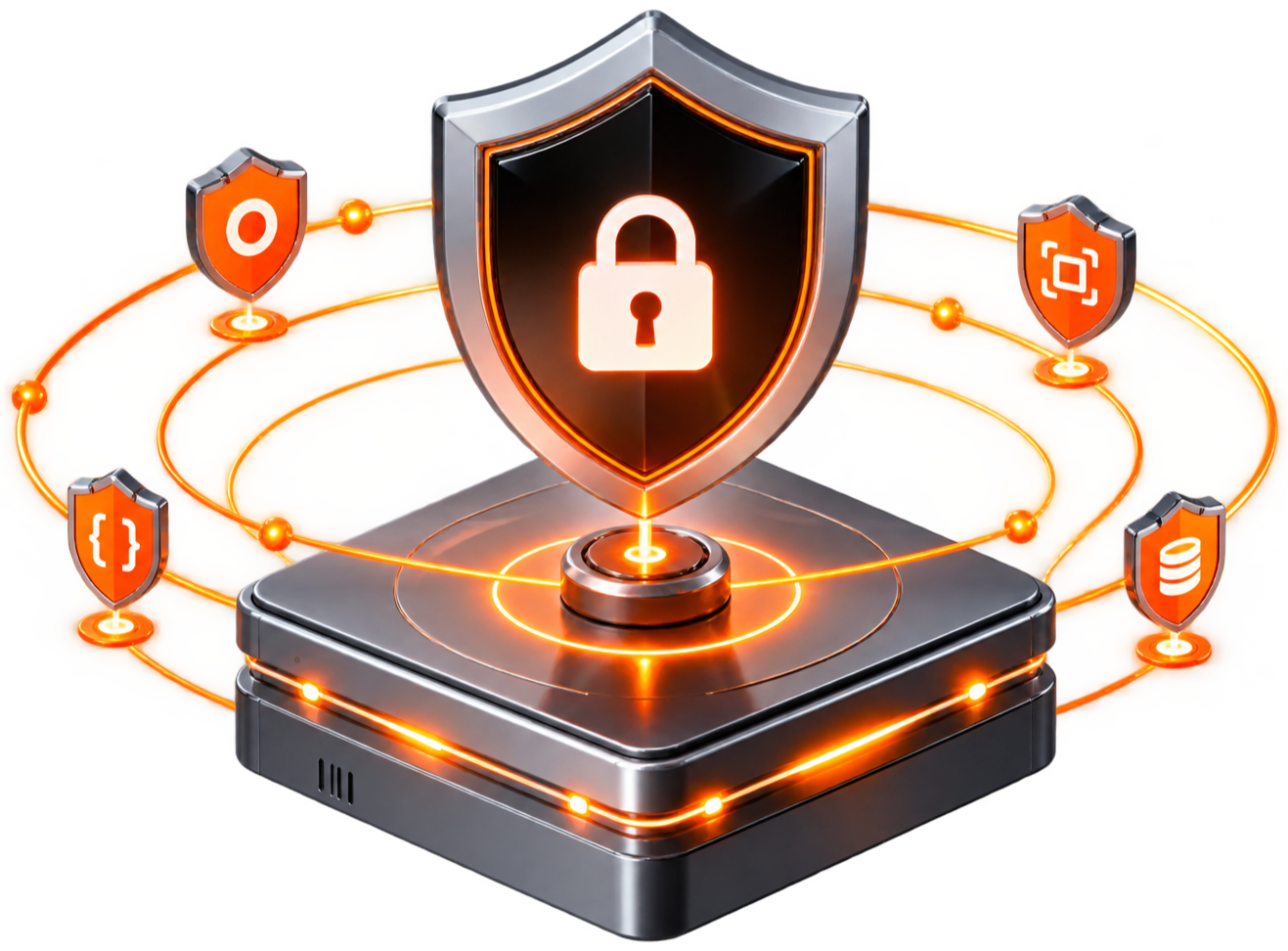
DevSecOps integrates security into the CI/CD process through vulnerability scanning, dependency checks, and infrastructure validation. Issues are identified early, before they reach production and become more expensive to fix.
Break the cycle
of release pain
Automate and
accelerate delivery
Build quality in
every step
Deliver with confidence
and consistency
Integrate security
from the start
We build pipelines around how your team works—not how a textbook says it should.
We design deployment automation that accounts for your specific application architecture, environment constraints, and rollback requirements—producing pipelines that behave predictably under real-world conditions.

Every pipeline we implement includes tested rollback capabilities and zero-downtime deployment strategies, ensuring that a failed release can be recovered quickly without extended customer-facing outages.

Automated, tested pipelines eliminate the manual steps where most production failures originate. Each release is verified through the same sequence of checks, making the process consistent regardless of who initiates it.

We reduce the time from a completed feature to a validated production release—giving your product teams a delivery cadence fast enough to compete in markets where customer expectations evolve quickly.

Security scanning, dependency auditing, and policy enforcement are integrated into the pipeline itself—ensuring compliance requirements are satisfied continuously rather than checked periodically.

Delivery pipelines require maintenance as your application evolves and your team grows. We remain engaged as a technical partner to keep your pipeline fast, reliable, and aligned with your current engineering practices.
Hear from clients who’ve experienced remarkable transformations with Flipworks Technology.
Working with several word themes and templates the last years only can say this is best in every level use it for my company and the reviews that I have already are all excellent. Not only the design but the code

Working with several word themes and templates the last years only can say this is best in every level use it for my company and the reviews that I have already are all excellent. Not only the design but the code

Working with several word themes and templates the last years only can say this is best in every level use it for my company and the reviews that I have already are all excellent. Not only the design but the code

Working with several word themes and templates the last years only can say this is best in every level use it for my company and the reviews that I have already are all excellent. Not only the design but the code

Working with several word themes and templates the last years only can say this is best in every level use it for my company and the reviews that I have already are all excellent. Not only the design but the code

Working with several word themes and templates the last years only can say this is best in every level use it for my company and the reviews that I have already are all excellent. Not only the design but the code

I’ve tried several templates before, but this one stands out. It offers a perfect balance of aesthetics and performance. My team and I are extremely satisfied with how easy it is to use and customize. Truly a top-notch product!

This theme has exceeded my expectations in every way. The design is elegant, the code is clean, and the support is outstanding. It has helped my business grow, and the feedback from my customers has been overwhelmingly positive!

After using multiple website themes over the years, I can confidently say this is the best. It meets all my expectations in terms of design and functionality. My clients love the seamless experience, and I highly recommend it for anyone looking for quality
Got questions? We've got answers. Navigate the complexities of digital presence with ease.
Book a call with our friendly team to get all your questions and queries answered.
CI/CD stands for Continuous Integration and Continuous Delivery. In practical terms, it means automating the process of testing code when developers contribute it (CI) and deploying that code to production when it is ready (CD)—removing the manual steps and coordination overhead that make releases slow and risky.
The most direct business impact is the ability to release software more frequently and with higher confidence. When deployment is automated and tested, you can release daily or weekly rather than monthly—responding to customer feedback faster, fixing problems sooner, and outpacing competitors who are still managing deployments manually.
Yes. CI/CD implementation does not require rebuilding your application. We work with your existing codebase and technology stack, introducing automation at the testing and deployment stages progressively—starting with the changes that deliver the most immediate value.
A functional pipeline for a single application can typically be delivered in four to eight weeks. A more comprehensive implementation covering multiple services, advanced testing stages, and security integration usually takes two to four months depending on application complexity.
No—in fact, the opposite. We implement zero-downtime deployment strategies such as blue-green deployments and rolling releases that update your application without interrupting user access. The reliability improvement from automation consistently reduces unplanned downtime compared to manual release processes.
We implement pipelines with strict access controls, encrypted secret management, and integrated security scanning. Credentials are never stored in code. Security audits and vulnerability checks are embedded in the pipeline itself, ensuring that only validated, compliant code reaches production.
We implement CI/CD pipelines on AWS, Microsoft Azure, and Google Cloud Platform, as well as hybrid environments. We select the pipeline tooling—GitHub Actions, GitLab CI/CD, Azure DevOps, or others—based on your existing development workflow rather than tool preferences.
Yes, to varying degrees. Many CI/CD practices—automated testing, deployment scripting, environment standardization—can be applied to legacy applications without rewriting them. For older systems with significant deployment complexity, we assess what is practical and deliver improvements where the business benefit is clearest.
Automated testing embedded in the pipeline means every change is verified against defined quality criteria before it is considered deployable. Problems are caught within minutes of being introduced rather than during a manual QA cycle days later. The combination of earlier detection and consistent testing consistently improves release quality.
We work with your existing toolchain where it is appropriate, and introduce new tools only when they address a specific gap. Our recommendations are based on your team's technical context and delivery requirements—not on commercial relationships with any tool vendor.
Yes. We offer ongoing managed DevOps services that include pipeline maintenance, performance monitoring, and updates as your application and infrastructure evolve. CI/CD pipelines require active stewardship to remain fast and reliable as the systems they serve grow in complexity.
We begin with a delivery process assessment that maps your current release workflow, identifies the specific bottlenecks and failure points causing the most operational cost, and defines the implementation approach. This produces a clear plan that your engineering leadership can review before any changes are made to your production environment.
Have a project in mind? Contact us for expert design and development solutions. Let's discuss how we can help grow your business.