
Business-First Migration Planning
We sequence migration phases based on business risk and operational priority, ensuring critical systems remain available throughout the process and early phases deliver tangible improvements.
Move your applications, data, and infrastructure to secure, scalable cloud environments with a structured approach that protects business continuity and eliminates the operational constraints of aging on-premise systems.
Carefully planned migrations that protect business continuity and deliver the operational improvements cloud adoption should provide.

A thorough evaluation of your current applications, data, and infrastructure that identifies what can move immediately, what requires refactoring, and how the migration should be sequenced to minimize business risk.

Structured movement of your web applications, APIs, and backend services to cloud environments, with full validation in staging before production traffic is redirected and downtime exposure is eliminated.

Careful, integrity-validated migration of your structured and unstructured data to cloud database platforms, ensuring complete and consistent records in the destination environment without data loss.

Rebuilding your compute, networking, and storage architecture in the cloud—designed around your operational requirements rather than simply replicating on-premise configurations in a new location.

Flexible architectures that combine cloud and on-premise infrastructure, or distribute workloads across multiple cloud providers, based on compliance requirements, cost optimization, and operational priorities.

Post-migration review and restructuring that ensures your cloud environment is performing at the level the business requires and that infrastructure spend is producing proportionate operational value.
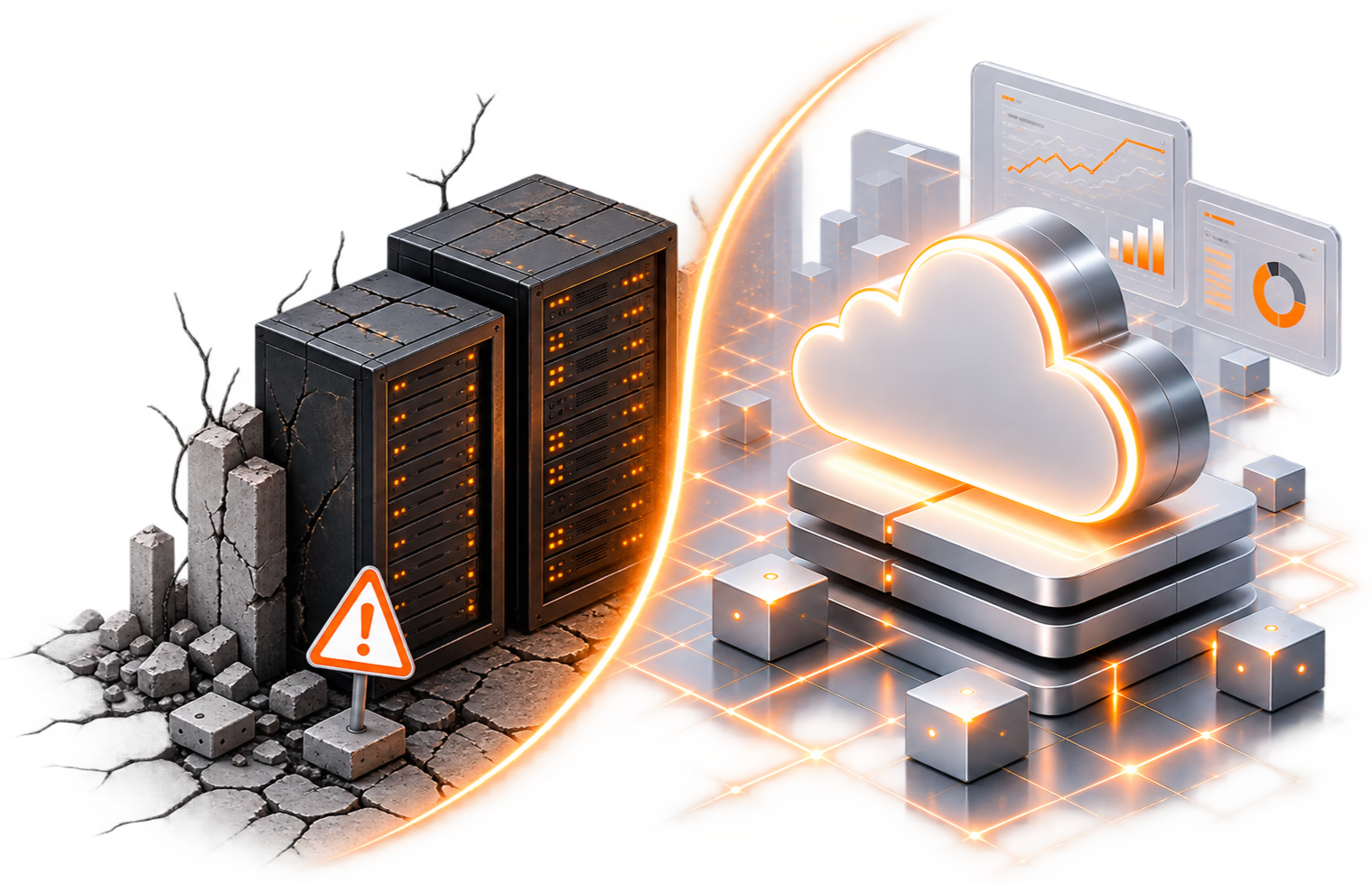
Aging infrastructure can become a hidden business constraint. Limited capacity, frequent maintenance, slow hardware upgrades, and unexpected failures increase costs, disrupt operations, and consume valuable engineering time.
A structured six-step approach that takes your business from planning and preparation through migration and hybrid adoption to long-term cloud optimization.
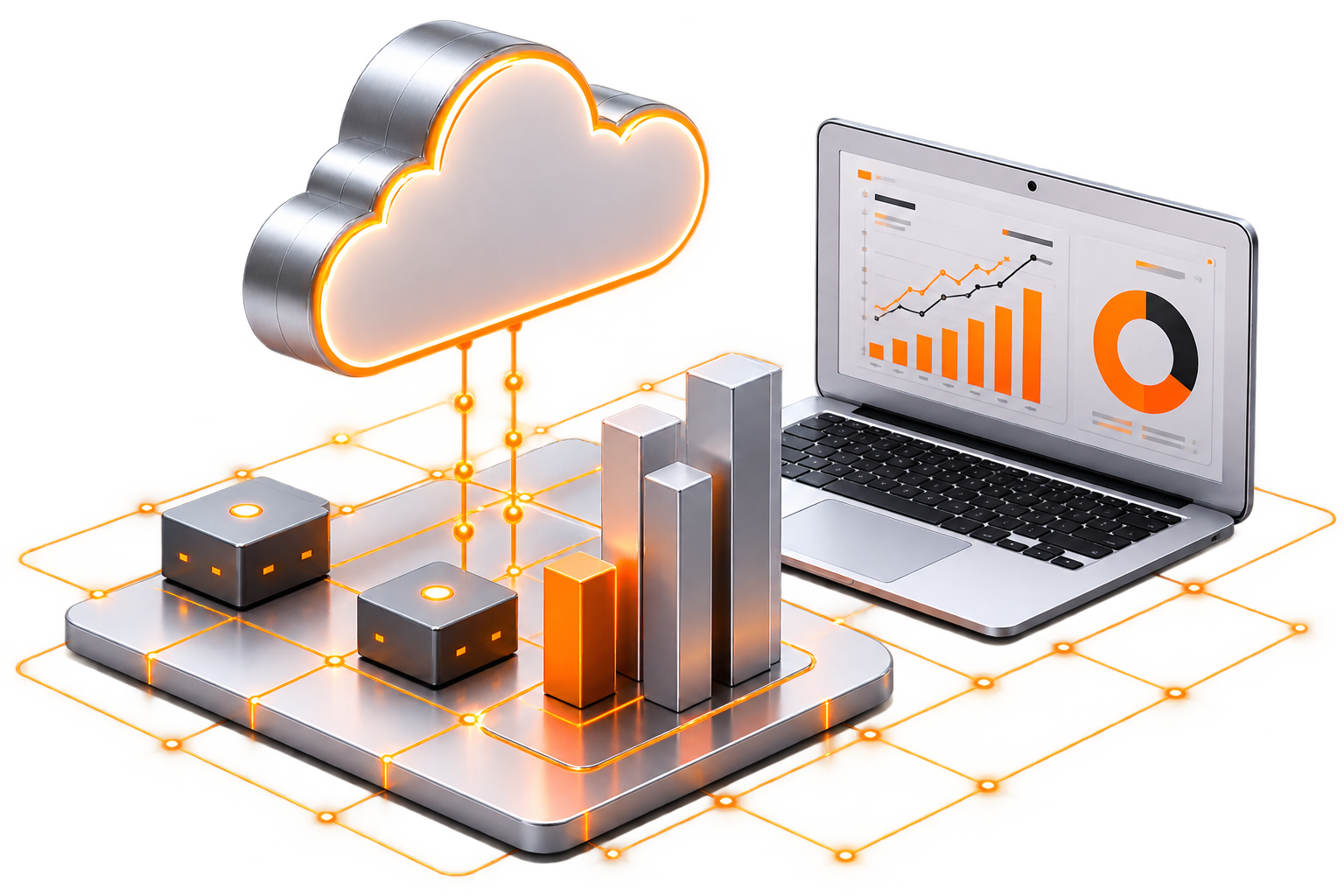
Cloud migration removes fixed infrastructure limits, reduces hardware management, improves redundancy, and enables faster scaling. It also creates a stronger foundation for automation and modern operational practices.
A successful migration requires more than moving systems to the cloud. We plan around application compatibility, data integrity, performance, and business continuity to prevent existing problems from becoming new cloud challenges.
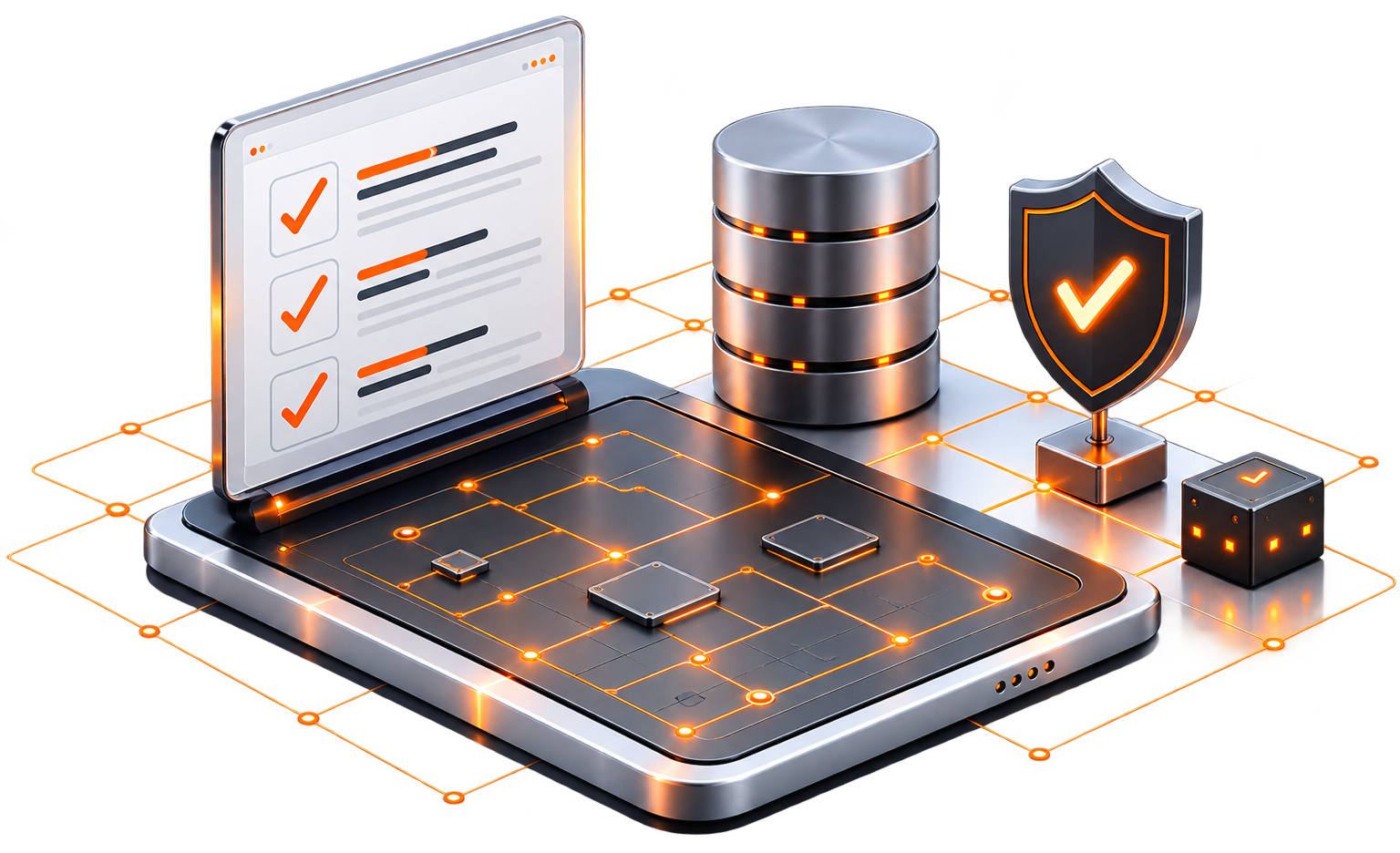
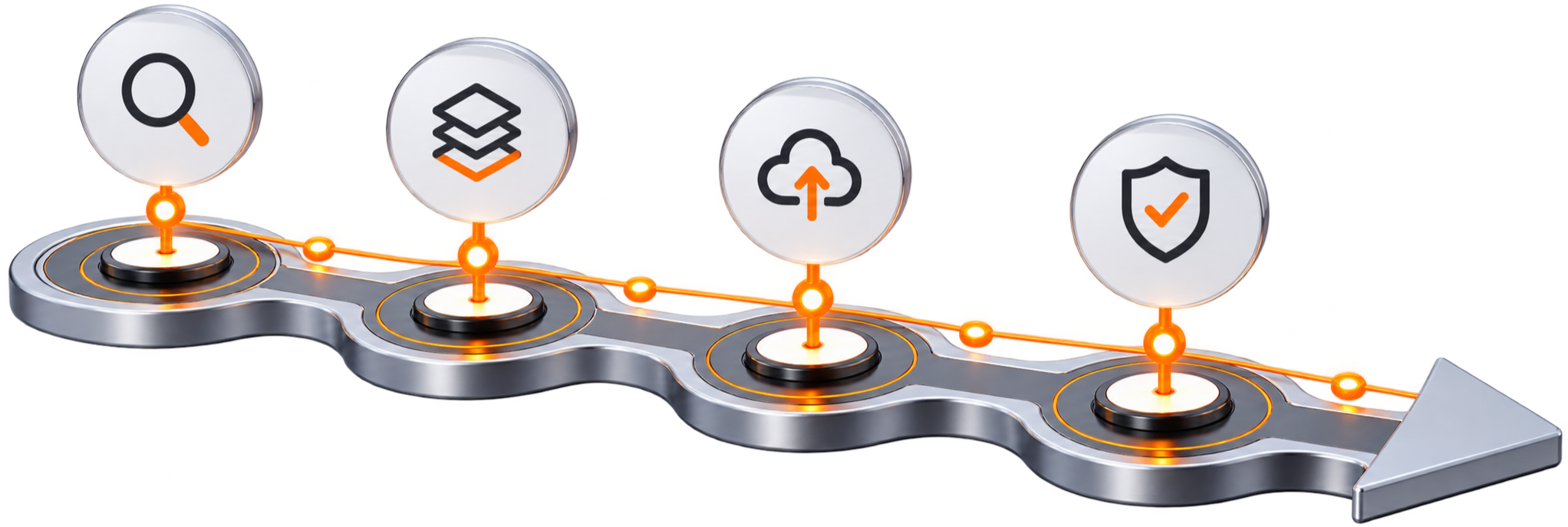
We begin with a Cloud Readiness Assessment to determine which workloads can move directly, which require refactoring, and which should temporarily remain on-premise. The result is a clear migration sequence with timelines, rollback plans, and continuity measures.
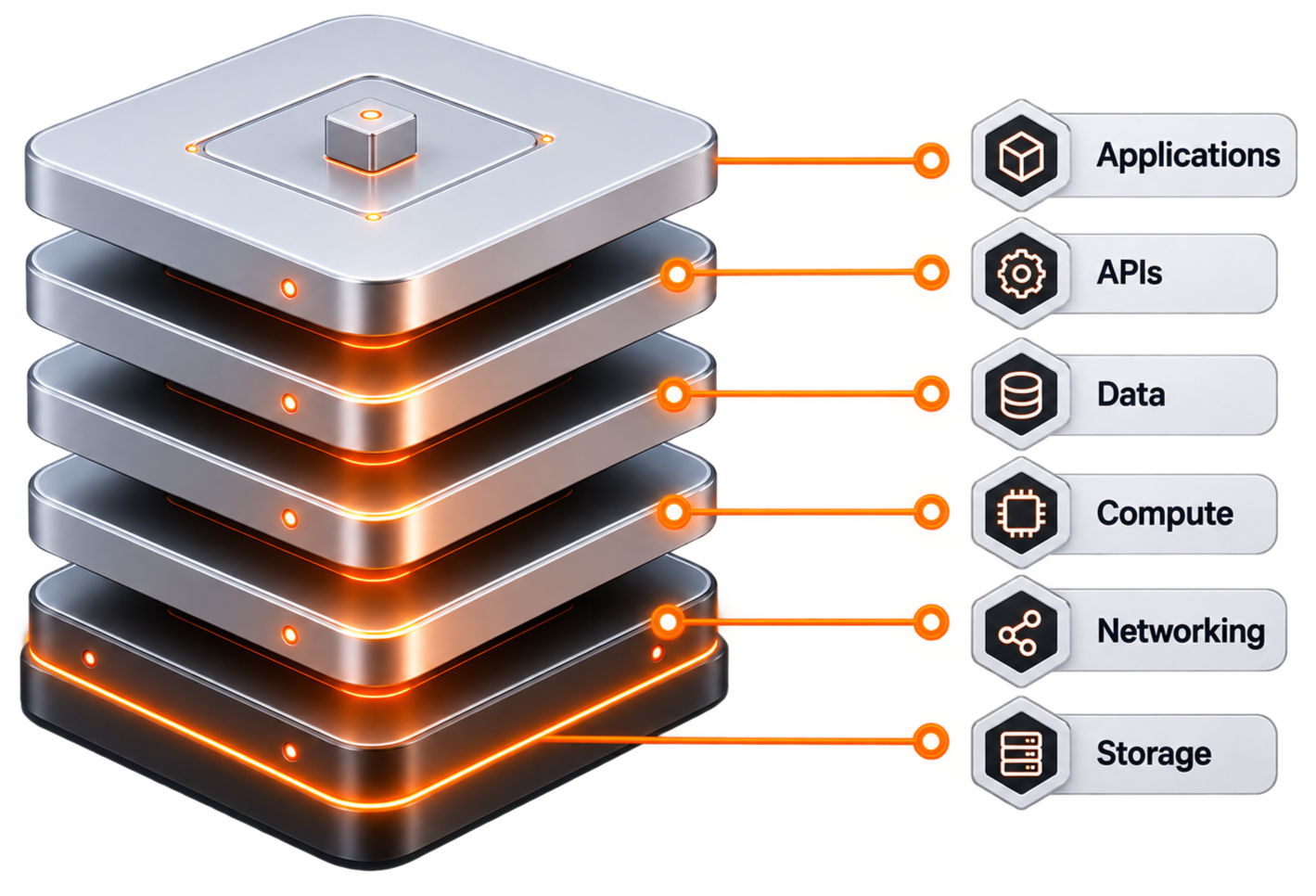
Our Cloud Migration services cover applications, databases, and infrastructure. We migrate and validate each layer—including applications, APIs, data, compute, networking, and storage—before production traffic is moved.
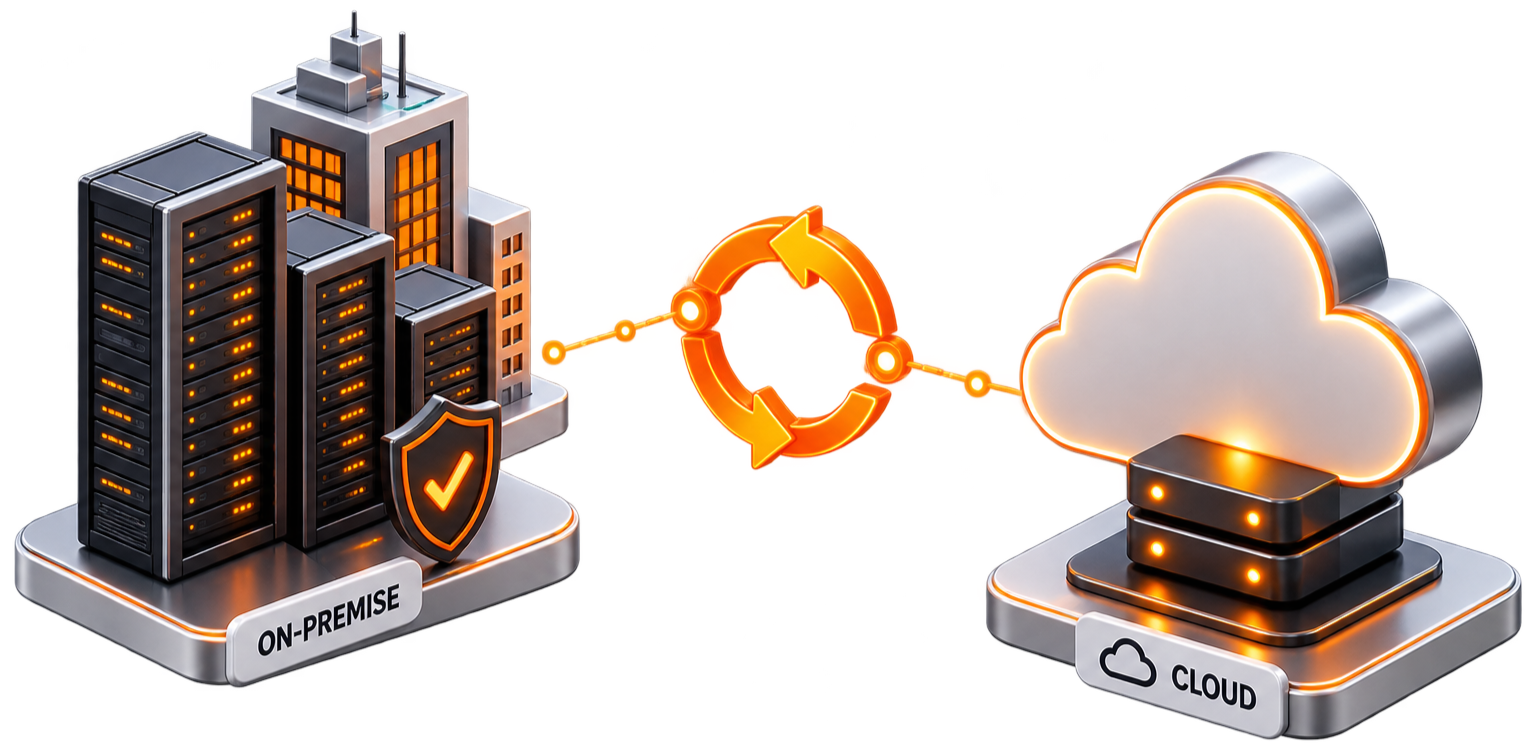
Cloud adoption does not have to be all-or-nothing. A hybrid approach can keep workloads with specific compliance, latency, or integration requirements on-premise while progressively moving suitable systems to the cloud.
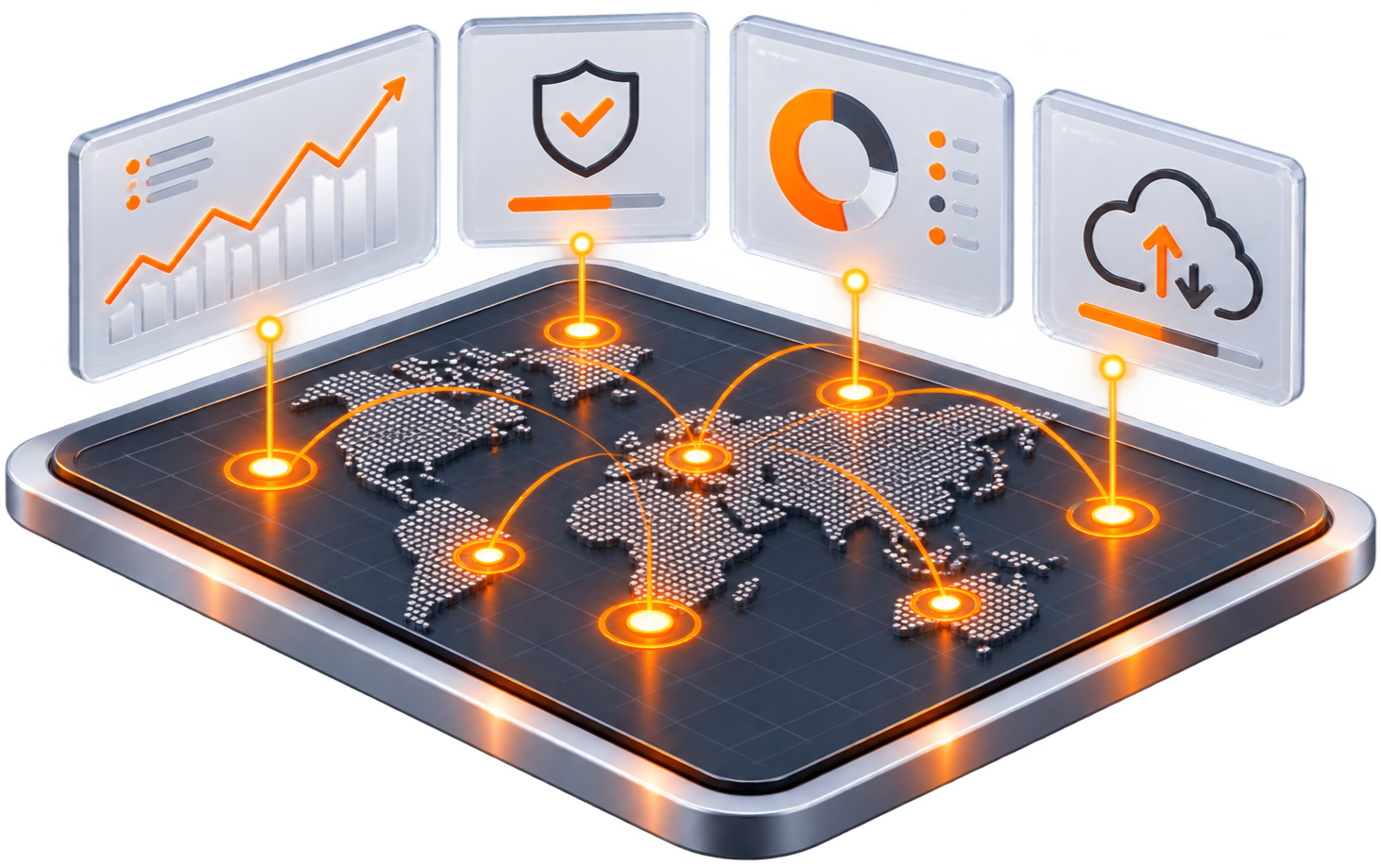
After migration, we continuously monitor performance, optimize resource usage, review security, and adapt the architecture as your needs evolve—helping your cloud environment remain secure, efficient, and valuable over time.
We plan migrations around your operational continuity requirements, not around cloud provider deployment templates.
We sequence migration phases based on business risk and operational priority, ensuring critical systems remain available throughout the process and early phases deliver tangible improvements.

We design migration procedures specifically to eliminate extended downtime, using parallel operation, automated cutover, and low-traffic execution windows to protect the availability your customers expect.

Every data transfer, every configuration change, and every production cutover is executed with encryption, access controls, and audit logging in place—protecting sensitive information throughout the transition.

Our migration experience spans industries with demanding compliance and operational requirements, including healthcare, financial services, logistics, and manufacturing—environments where failed migrations carry real business consequences.

We do not simply move your existing configuration to the cloud. We design the destination architecture for the operational requirements your business will have in two years, not just the ones it has today.

After migration, we remain engaged as your cloud operations partner—monitoring performance, managing security updates, optimizing spend, and evolving the architecture as your business requirements grow.
Hear from clients who’ve experienced remarkable transformations with Flipworks Technology.
Working with several word themes and templates the last years only can say this is best in every level use it for my company and the reviews that I have already are all excellent. Not only the design but the code

Working with several word themes and templates the last years only can say this is best in every level use it for my company and the reviews that I have already are all excellent. Not only the design but the code

Working with several word themes and templates the last years only can say this is best in every level use it for my company and the reviews that I have already are all excellent. Not only the design but the code

Working with several word themes and templates the last years only can say this is best in every level use it for my company and the reviews that I have already are all excellent. Not only the design but the code

Working with several word themes and templates the last years only can say this is best in every level use it for my company and the reviews that I have already are all excellent. Not only the design but the code

Working with several word themes and templates the last years only can say this is best in every level use it for my company and the reviews that I have already are all excellent. Not only the design but the code

I’ve tried several templates before, but this one stands out. It offers a perfect balance of aesthetics and performance. My team and I are extremely satisfied with how easy it is to use and customize. Truly a top-notch product!

This theme has exceeded my expectations in every way. The design is elegant, the code is clean, and the support is outstanding. It has helped my business grow, and the feedback from my customers has been overwhelmingly positive!

After using multiple website themes over the years, I can confidently say this is the best. It meets all my expectations in terms of design and functionality. My clients love the seamless experience, and I highly recommend it for anyone looking for quality
Got questions? We've got answers. Navigate the complexities of digital presence with ease.
Book a call with our friendly team to get all your questions and queries answered.
The primary business reasons are operational resilience, scalability, and the elimination of capital expenditure on hardware that depreciates and requires constant maintenance. Cloud infrastructure scales in response to demand, recovers automatically from hardware failures, and allows your engineering team to focus on building products rather than maintaining servers.
Timeline depends on the size and complexity of your application portfolio, the number of systems involved, and your compliance requirements. A focused migration of a small application set can be completed in six to ten weeks. A comprehensive enterprise migration typically spans six to twelve months in structured phases.
We structure migration specifically to prevent meaningful operational interruption. Production cutover happens only after each workload has been fully validated in the new environment, and we execute cutovers during low-traffic windows with tested rollback procedures ready if anything unexpected occurs.
Managed correctly, migration reduces your security exposure rather than increasing it. We encrypt all data in transit during migration, implement strict access controls throughout the process, and establish a secure cloud security architecture in the destination environment before any production data is moved.
The right platform depends on your existing technology investments, workload characteristics, geographic data requirements, and compliance obligations. AWS, Azure, and Google Cloud each have distinct strengths. We evaluate your situation without any commercial preference and recommend the platform—or combination of platforms—best suited to your requirements.
Yes, in most cases, though the approach varies. Some legacy applications migrate directly. Others require refactoring to operate efficiently in a cloud environment. Some older systems may be better retained on-premise in a hybrid arrangement while new systems are built cloud-native. The readiness assessment identifies the right approach for each application.
Data integrity is treated as the highest priority throughout the migration process. We conduct thorough pre-migration data validation, execute transfers with integrity checksums at each step, and validate the destination data against the source before any production cutover is performed. No legacy data is decommissioned until the new environment has been fully validated.
Migration investment depends on application portfolio size, the complexity of your database environments, the level of refactoring required, and the chosen cloud platform. We provide transparent, detailed cost projections during the strategy phase before any migration work begins, alongside an estimate of the ongoing operational cost savings.
Migration is the beginning of a cloud operations program, not the conclusion. Post-migration, we provide active infrastructure management, performance monitoring, ongoing cost optimization, and security posture reviews. The cloud environment requires deliberate ongoing management to deliver consistent business value.
Yes. Phased migration is often the right approach—particularly for organizations with large application portfolios, complex integration dependencies, or limited internal capacity for change. We sequence migrations to deliver early value while managing risk, ensuring each phase completes cleanly before the next begins.
We use a combination of parallel operation, where both old and new environments run simultaneously during validation, and blue-green cutover techniques that redirect traffic to the new environment only after it has been confirmed to be operating correctly. Rollback procedures are tested and ready throughout.
We offer structured cloud managed services that cover continuous infrastructure monitoring, security patch management, incident response, cost optimization, and capacity planning. We treat post-migration support as an ongoing operational responsibility rather than a reactive helpdesk function.
Have a project in mind? Contact us for expert design and development solutions. Let's discuss how we can help grow your business.