

Business-First Implementation
We begin by identifying specific operational costs—such as machinery downtime or space inefficiencies—ensuring the replica delivers measurable savings.
Map your physical assets, factories, and facilities into a dynamic software model, allowing you to run simulations, predict maintenance needs, and optimize production lines using real operational data.
Custom digital replicas that connect your physical assets and processes to live data for simulation and predictive control.

Map production lines and machinery to monitor output, test scheduling scenarios virtually, and eliminate manufacturing bottlenecks.

Connect factory systems to visualize energy usage, machine capacity, and raw material status from a unified operational view.

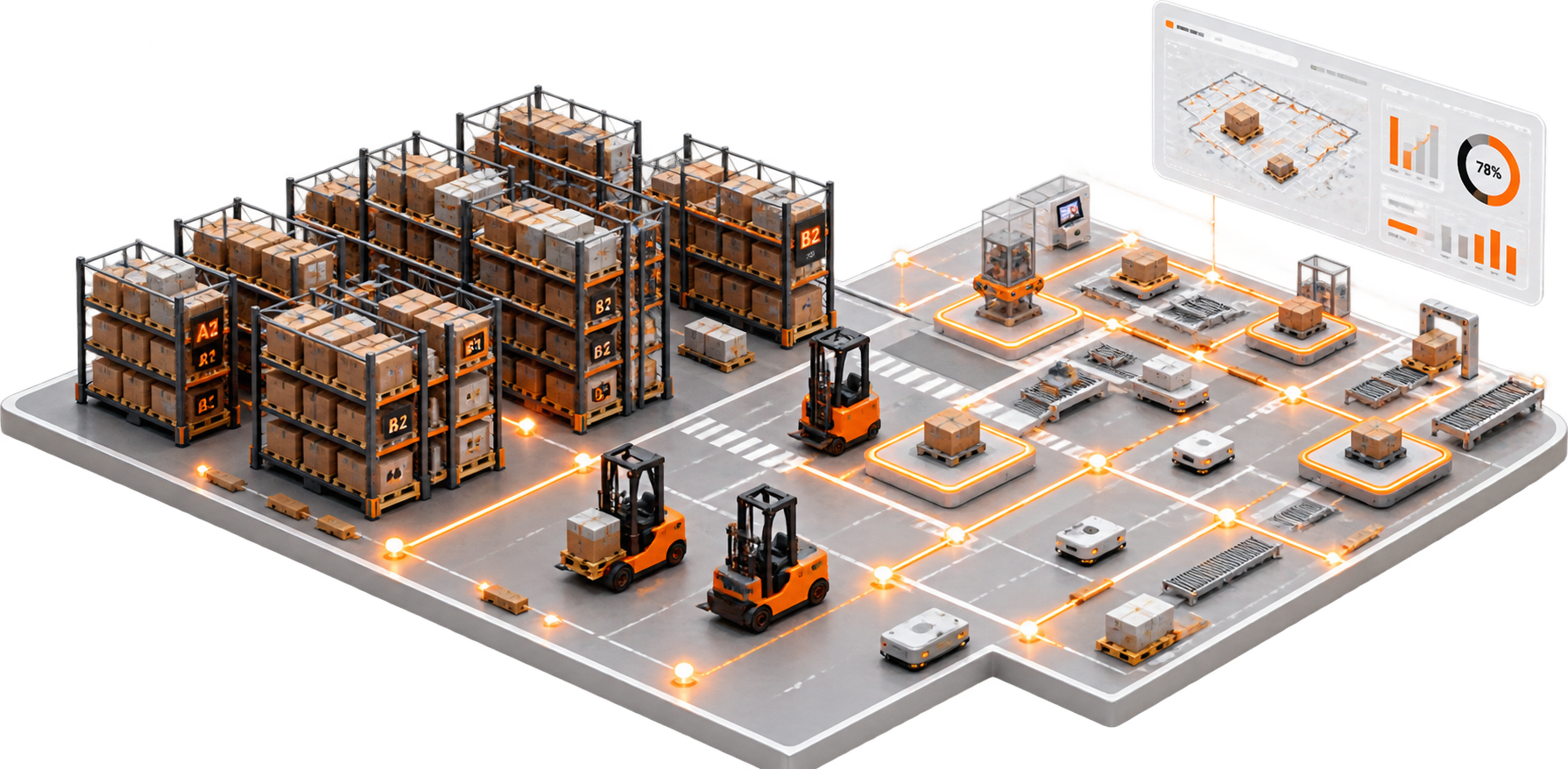
Simulate inventory movements and traffic patterns to optimize storage layout, improve picking speed, and reduce logistics bottlenecks.

Track equipment wear indicators to schedule repairs before machinery failures disrupt production schedules.

Recreate commercial building systems to optimize HVAC operations, track occupancy patterns, and reduce energy consumption.

Monitor the health and running status of high-value tools, pumps, and motors in remote or hazardous locations.
Complex facilities, manufacturing lines, and supply chains need more than isolated reports and manual inspections. Digital twins provide real-time visibility into operations, helping teams identify issues, optimize resources, and make informed decisions.
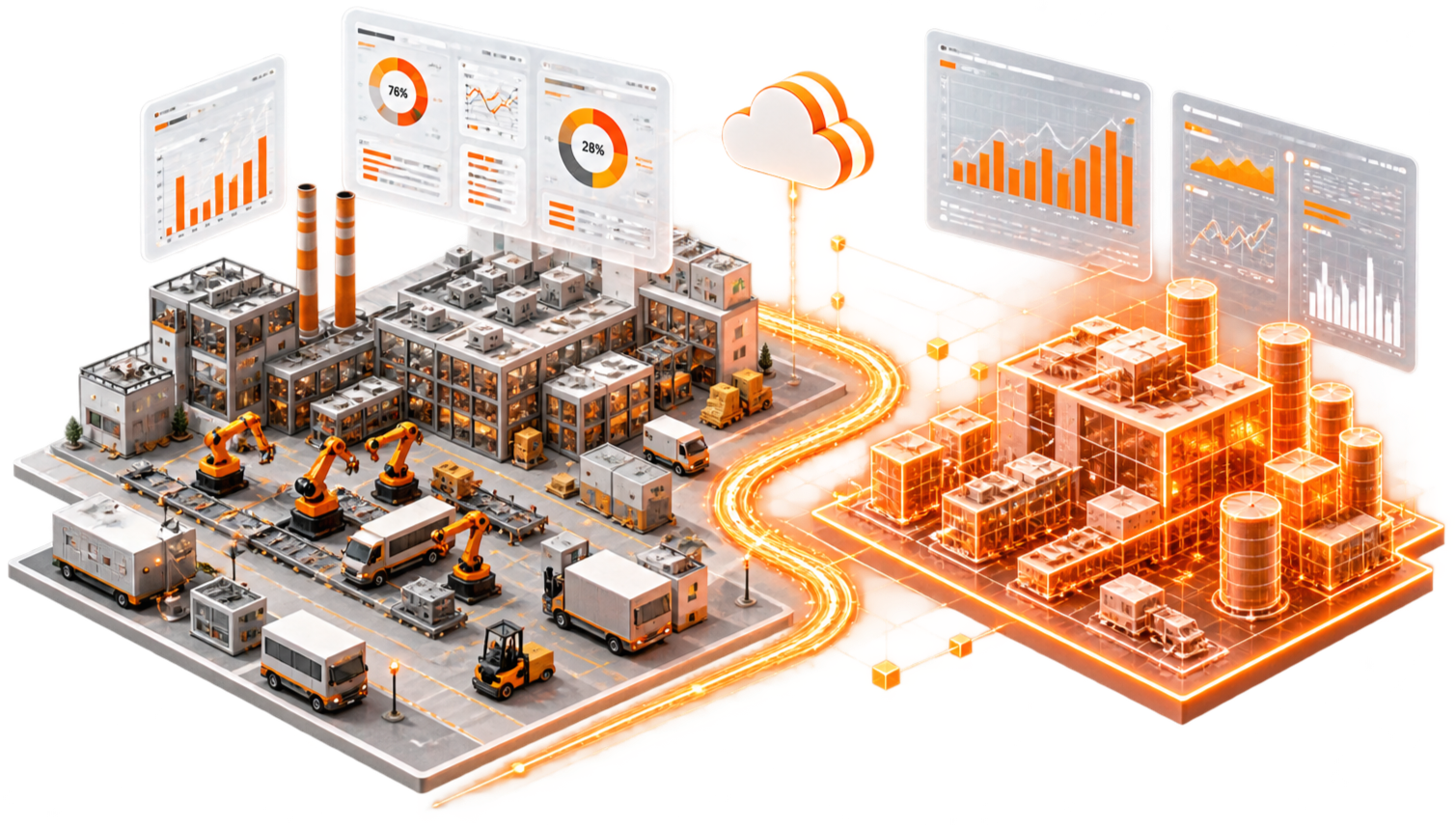
A seven-step journey that builds digital twins, connects emerging technologies, optimizes operations, automates actions, and supports long-term growth.
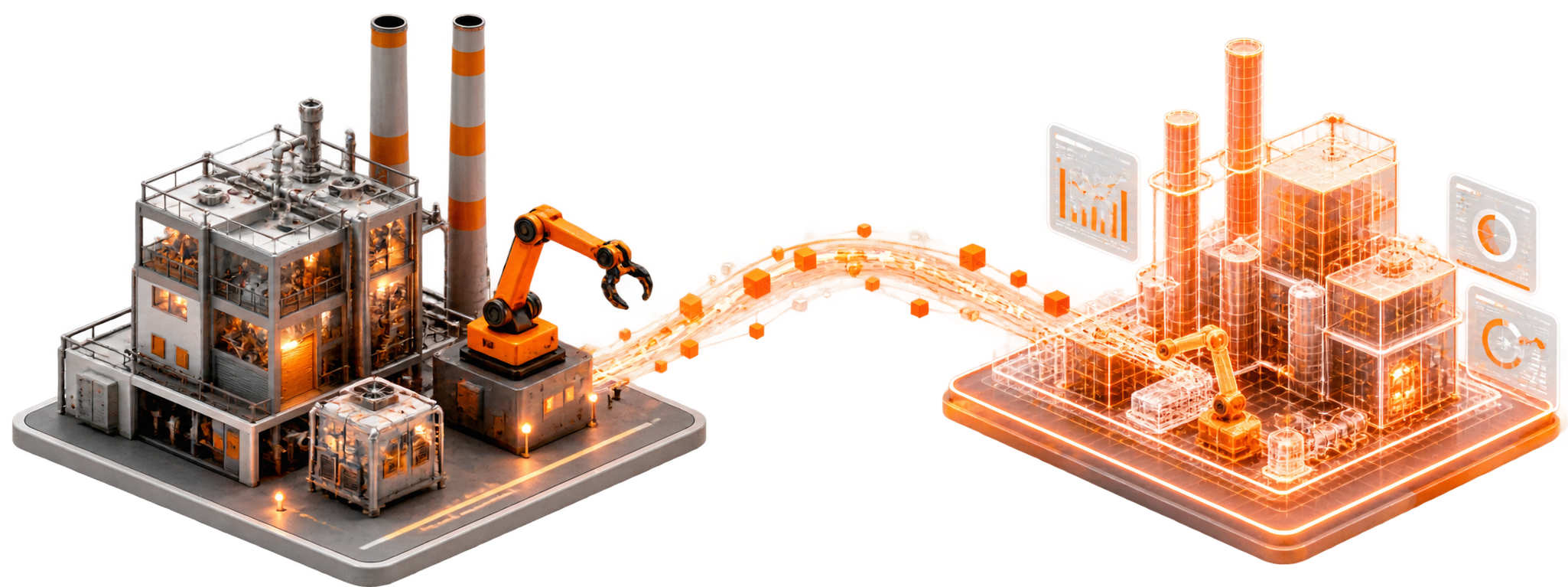
A digital twin creates a live software replica of physical assets, facilities, and processes using real-time operational data. Teams can monitor performance, predict maintenance needs, and test changes virtually before affecting active operations.
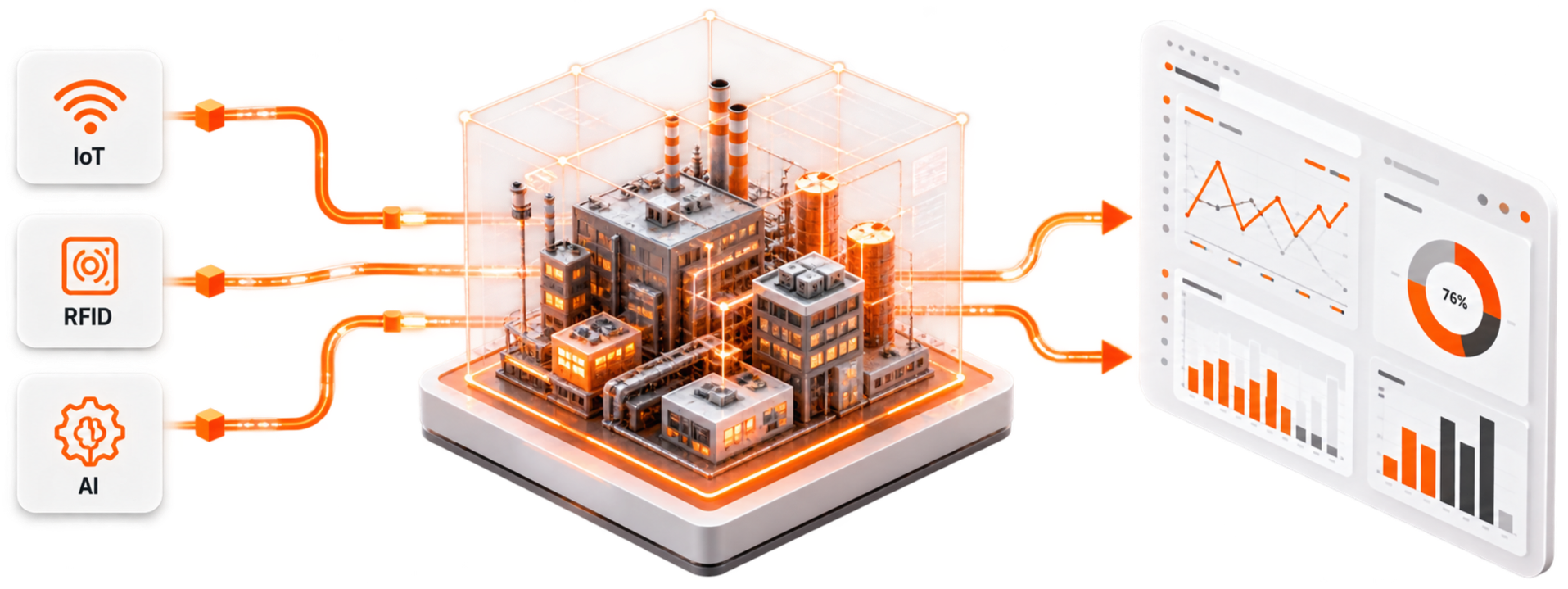
We connect digital twins with IoT Solutions, RFID Solutions, and AI Solutions to combine sensor data, asset tracking, and predictive insights. This turns physical data into clear, actionable business decisions.
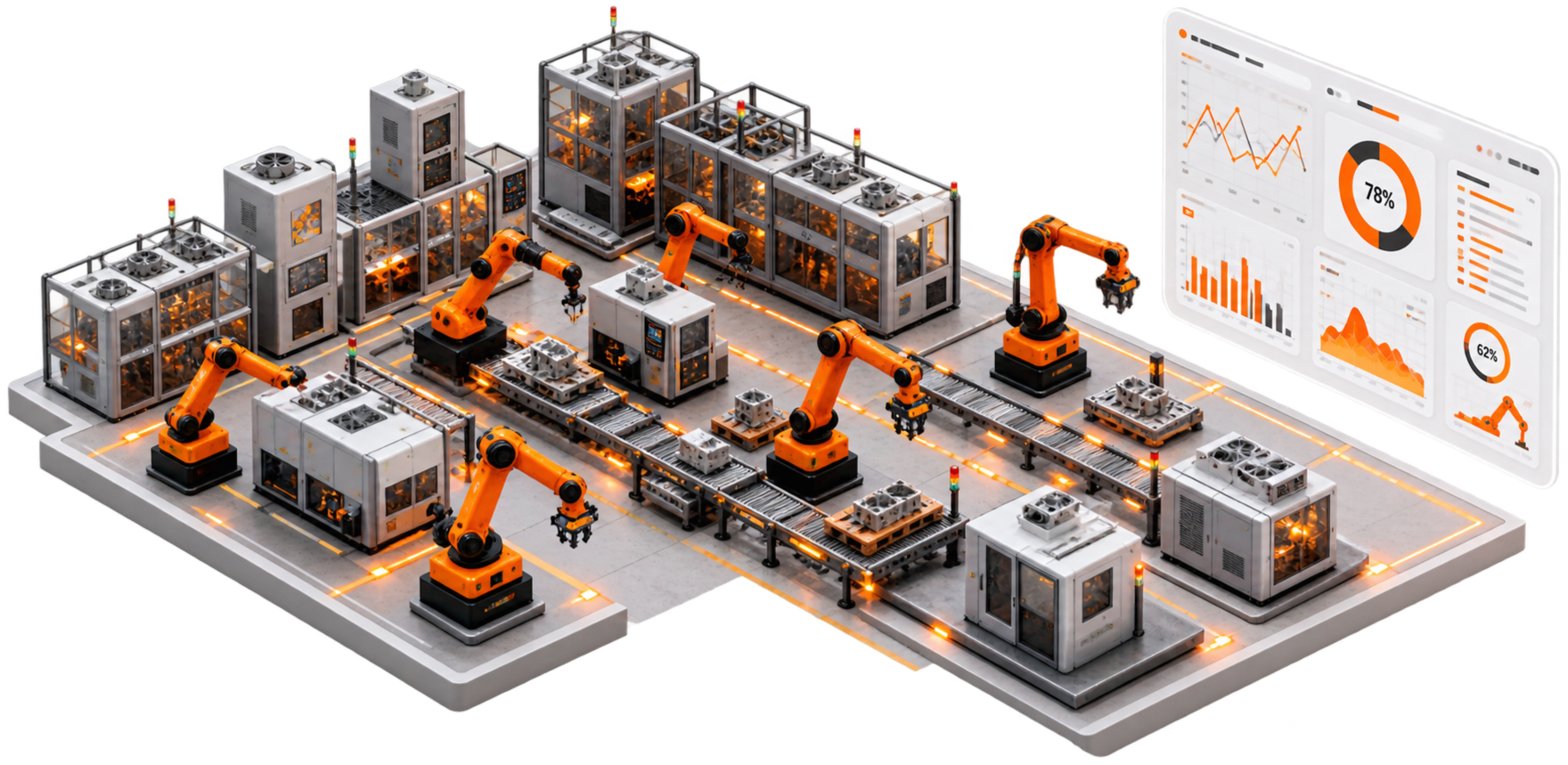
Digital twins help manufacturers visualize machine performance, cycle times, power usage, and production output. Teams can identify bottlenecks, improve asset performance, and plan maintenance with less disruption.
Virtual warehouse models help teams test layouts and material flows before making physical changes. This can improve picking efficiency, reduce unnecessary movement, and optimize warehouse space.
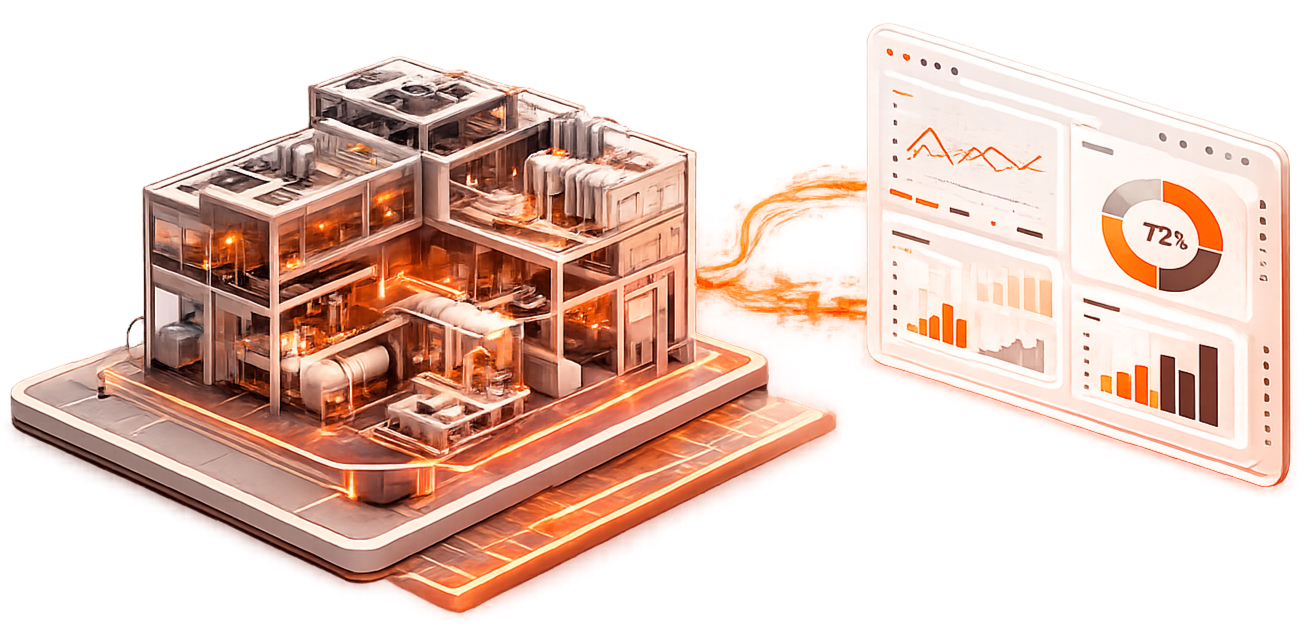
Digital replicas of HVAC, electrical, and occupancy systems help facilities teams model demand and optimize energy use. This reduces waste and operating costs while maintaining comfortable environments.
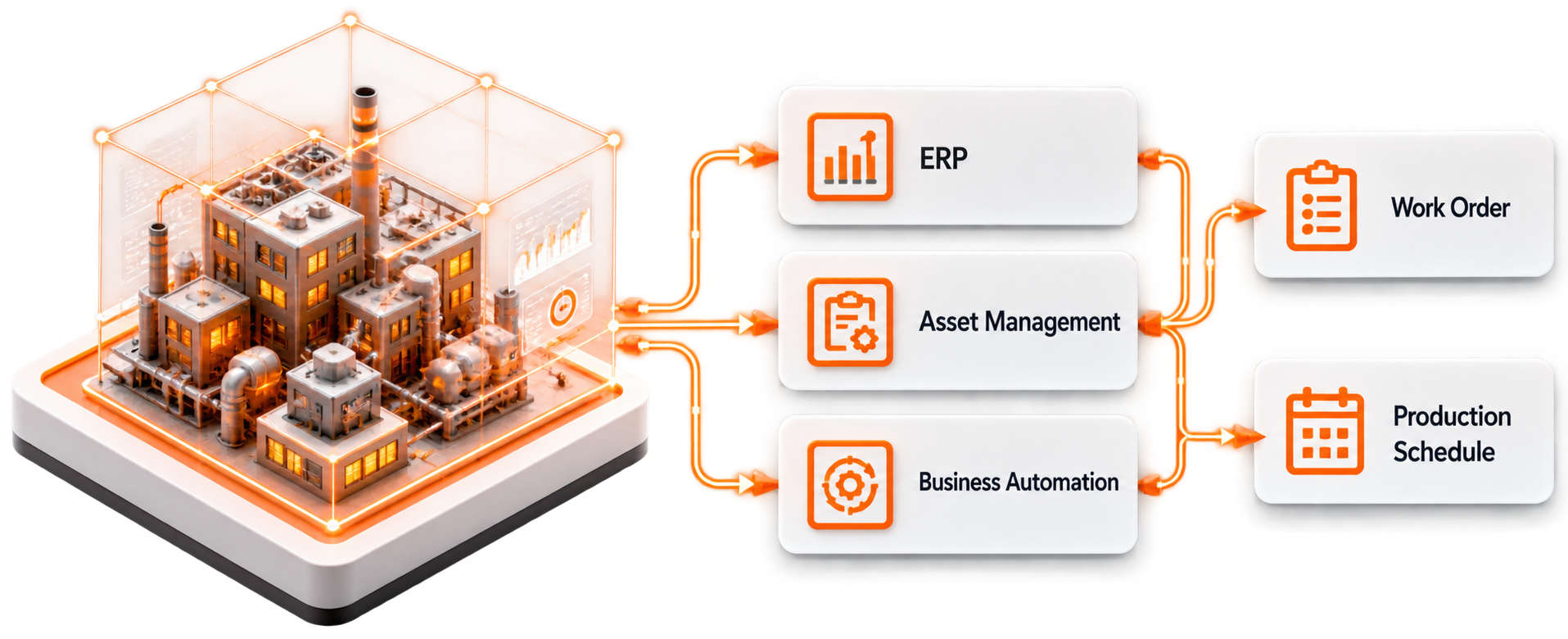
We integrate digital twins with ERP, asset management, and Business Automation systems so operational insights can trigger real actions. For example, a detected issue can automatically create a work order or adjust a production schedule.
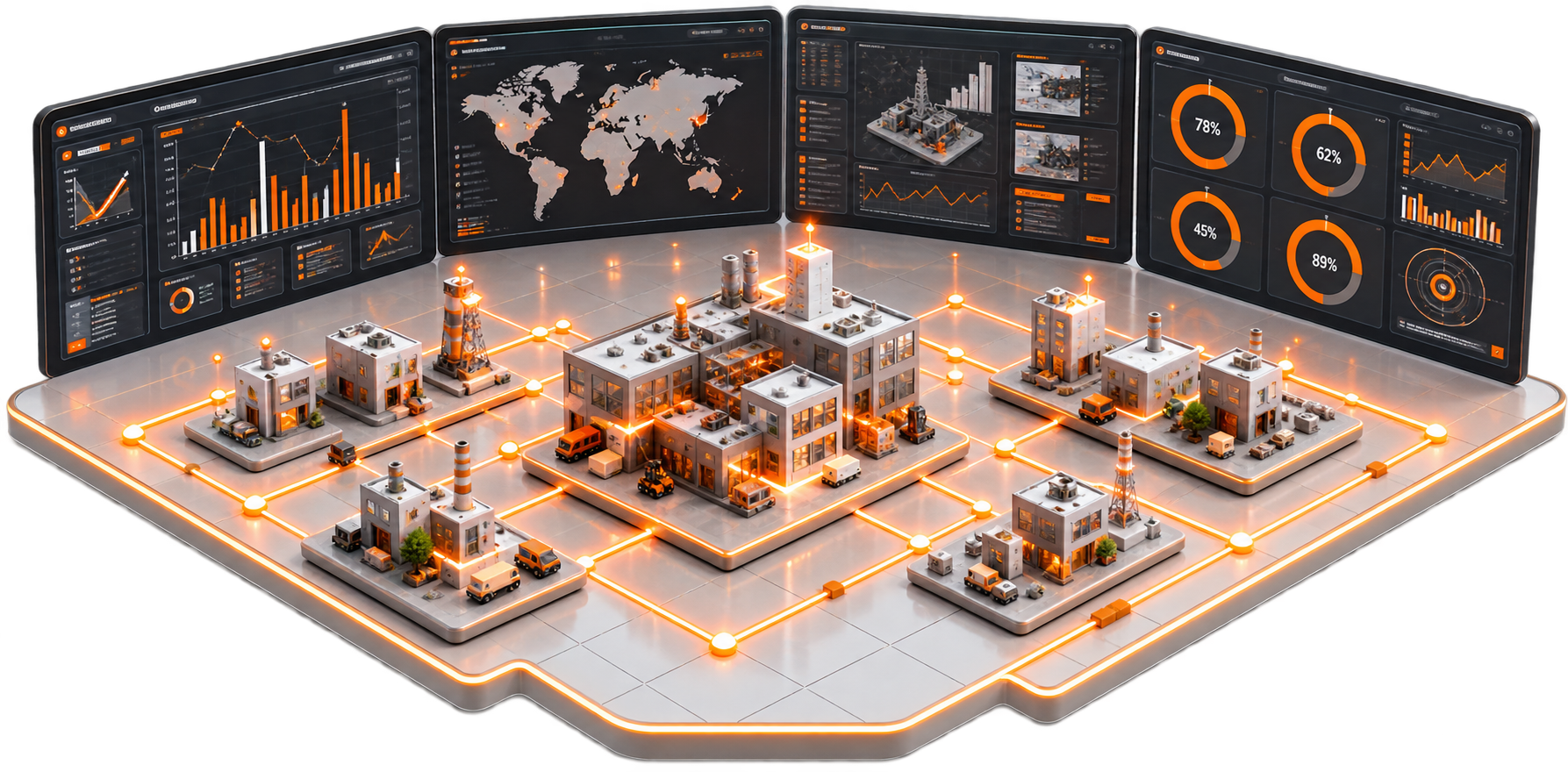
We build and support practical digital twin systems that evolve with your operations. From physical infrastructure mapping and secure data pipelines to dashboards and business integrations, we keep your operational models accurate and useful as your business grows.
We build functional operational models designed to integrate with your existing business databases and workflows.
We begin by identifying specific operational costs—such as machinery downtime or space inefficiencies—ensuring the replica delivers measurable savings.

We understand factory floors, shipping logistics, and facility management, allowing us to build models that reflect physical operational realities.

We focus on building useful models rather than complex 3D visual effects, ensuring the software remains easy for operations teams to use.

We design our replicas to scale from a single piece of equipment to entire production facilities or global warehouse networks.

We manage the entire integration process, connecting sensors, networks, database systems, and user interfaces into a single application.

We provide ongoing maintenance and performance updates to keep your digital replicas accurate as your workflows and physical environments change.
Hear from clients who’ve experienced remarkable transformations with Flipworks Technology.
Working with several word themes and templates the last years only can say this is best in every level use it for my company and the reviews that I have already are all excellent. Not only the design but the code

Working with several word themes and templates the last years only can say this is best in every level use it for my company and the reviews that I have already are all excellent. Not only the design but the code

Working with several word themes and templates the last years only can say this is best in every level use it for my company and the reviews that I have already are all excellent. Not only the design but the code

Working with several word themes and templates the last years only can say this is best in every level use it for my company and the reviews that I have already are all excellent. Not only the design but the code

Working with several word themes and templates the last years only can say this is best in every level use it for my company and the reviews that I have already are all excellent. Not only the design but the code

Working with several word themes and templates the last years only can say this is best in every level use it for my company and the reviews that I have already are all excellent. Not only the design but the code

I’ve tried several templates before, but this one stands out. It offers a perfect balance of aesthetics and performance. My team and I are extremely satisfied with how easy it is to use and customize. Truly a top-notch product!
This theme has exceeded my expectations in every way. The design is elegant, the code is clean, and the support is outstanding. It has helped my business grow, and the feedback from my customers has been overwhelmingly positive!

After using multiple website themes over the years, I can confidently say this is the best. It meets all my expectations in terms of design and functionality. My clients love the seamless experience, and I highly recommend it for anyone looking for quality
Got questions? We've got answers. Navigate the complexities of digital presence with ease.
Book a call with our friendly team to get all your questions and queries answered.
A digital twin is a dynamic software replica of a physical asset, facility, or operational process. By connecting the model to real-time data sources, it allows you to monitor current performance, run simulation scenarios, and predict maintenance needs based on actual usage patterns.
Manufacturing plants, warehousing and logistics companies, utility networks, and commercial real estate managers see the highest returns. Any business running complex, physical operations where equipment downtime or spatial inefficiencies create high costs will benefit from a replica.
Yes. We design solutions to connect with your existing machinery, sensors, and database systems. You do not need to replace your assets; we build the integration layer that captures data from your current infrastructure.
Not necessarily. While real-time sensors provide rich data, we can build initial replicas using data from existing ERP databases, SCADA systems, historical logs, and inventory software to establish a baseline.
A focused pilot model for a single production line or warehouse zone typically takes twelve to sixteen weeks to deploy. Larger, multi-site models with deep integrations generally require four to six months.
The investment depends on the scale of the facility, the density of data sources, and the required integrations. We scope projects in modular phases, ensuring each step delivers clear operational benefits and measurable returns.
Yes. Mid-sized companies can deploy focused replicas to solve specific problems, such as tracking material bottlenecks or monitoring critical machinery. This provides operational control without requiring enterprise-level budgets.
Yes. Integration with ERP, WMS, and asset management databases is central to our work. This allows the digital replica to trigger maintenance tickets, update inventory status, and adjust production plans automatically.
We apply enterprise-grade security protocols, including encrypted data transmission, secure API integrations, and access controls. This ensures that your operational models and facility data remain private and secure.
Yes. By comparing live data (such as vibration, temperature, and cycle counts) against historical performance patterns, the system can identify anomalies and alert maintenance teams to schedule repairs before a breakdown occurs.
Yes. The simulation capabilities allow production managers to test scheduling variations, product changeovers, and layout modifications virtually to identify bottlenecks before making physical adjustments on the factory floor.
We begin with an assessment of your facility and processes. We identify your highest-cost friction points, map your current data sources, and build a project roadmap that outlines target outcomes and estimated development costs.
Have a project in mind? Contact us for expert design and development solutions. Let's discuss how we can help grow your business.