
Business-First Automation Strategy
We identify the highest-value automation opportunities by analyzing operational cost and error frequency before recommending any technical approach or platform.
Deploy intelligent software automation that handles high-volume, repetitive operational tasks with speed and precision—freeing your workforce to focus on work that requires human expertise.
Purpose-built automation that handles the repetitive work so your teams do not have to.

Automated handling of bank reconciliation, expense processing, payment runs, and financial reporting—reducing the administrative workload of your finance team and improving accuracy across every cycle.

Structured automation of employee onboarding, offboarding, system provisioning, and compliance documentation—ensuring every HR process completes on time without manual tracking.

Intelligent extraction of invoice data from email and PDF sources, with automatic validation, matching against purchase orders, and routing for approval without manual data entry.

Automated extraction, classification, and routing of information from contracts, compliance documents, and operational records—eliminating the manual handling that creates delays and errors.

Automated handling of routine customer requests, account updates, and status communications—reducing resolution times while freeing service staff to focus on complex cases requiring judgment.

Bridging automation that connects aging business systems incapable of native integration—extracting and entering data at the interface level without requiring any changes to the underlying software.
Data entry, invoice processing, employee onboarding, and compliance reporting can consume valuable employee time without requiring real judgment. These repetitive tasks reduce productivity and increase the risk of errors.
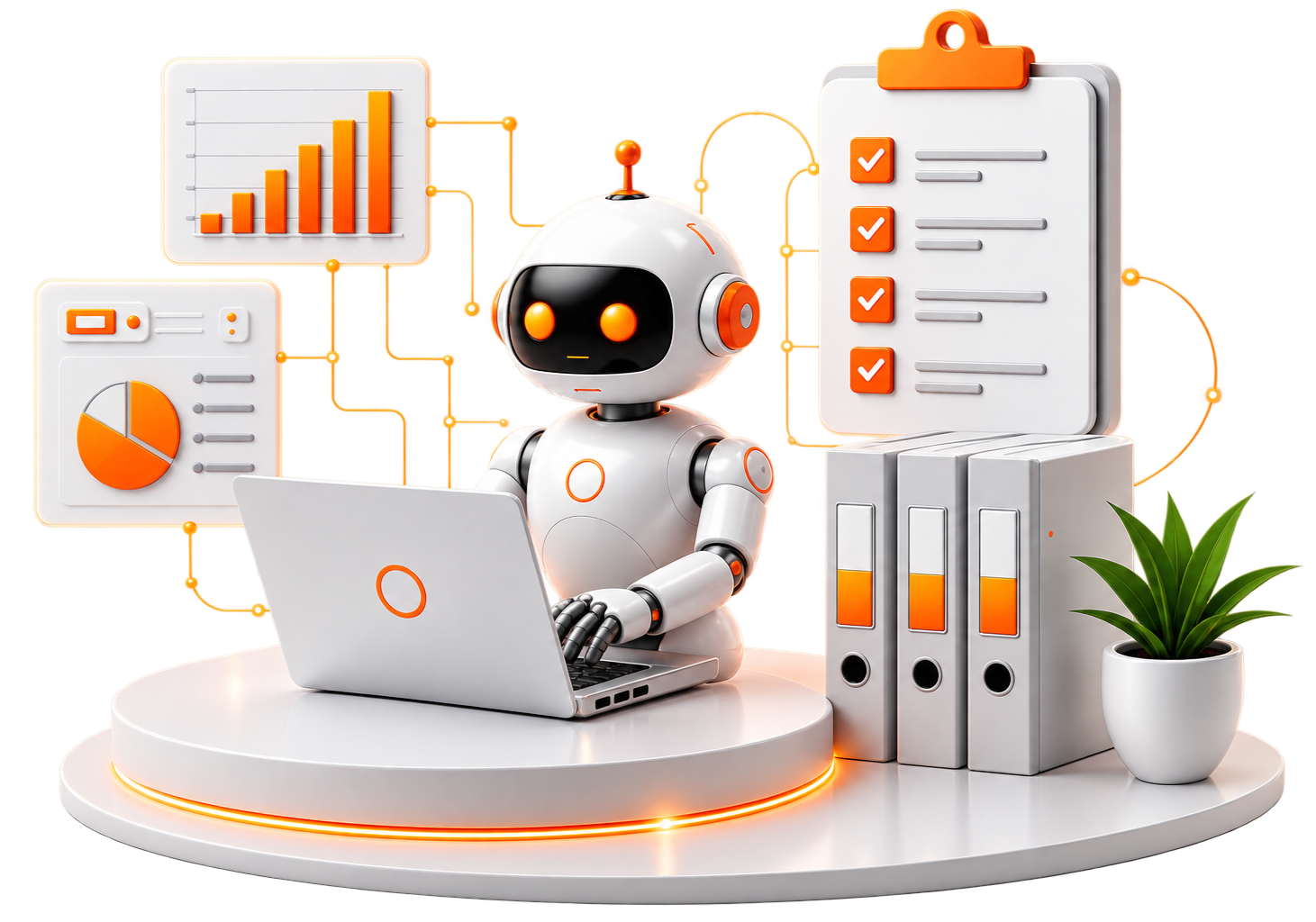
A clear path to automate, streamline, and unlock greater efficiency across your business.

Robotic Process Automation (RPA) replicates routine human actions across business systems, processing tasks continuously with greater speed, consistency, and accuracy.

We identify the processes consuming the most time, creating the most errors, or blocking other teams, then prioritize automation opportunities based on their business impact.
When legacy systems lack modern APIs or integration options, RPA can interact with them through their existing interfaces—moving and processing data without changing the underlying software.
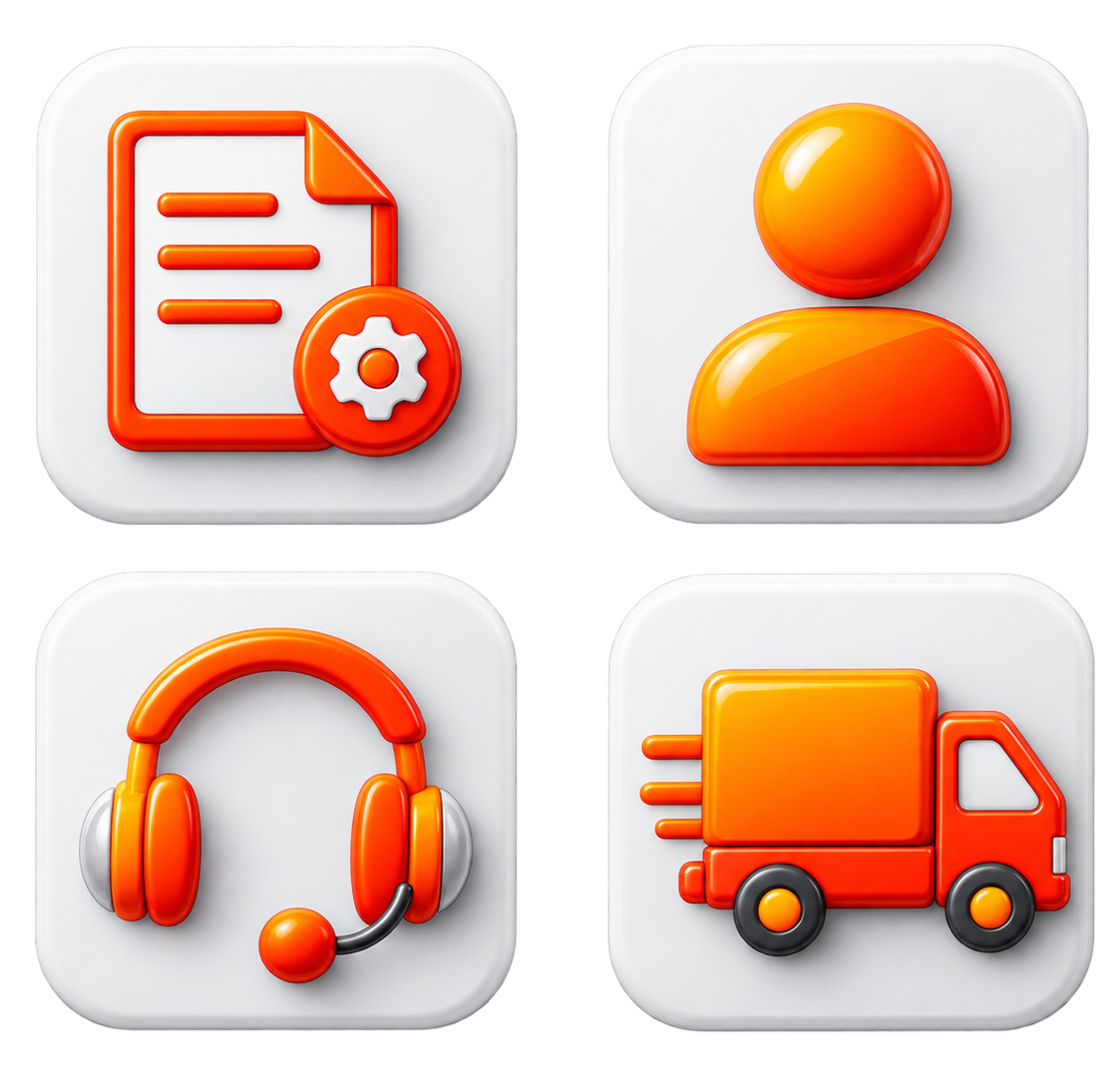
RPA can automate finance tasks such as invoice processing, HR onboarding workflows, customer service updates, and logistics activities including order tracking and shipping documentation.

When processes require judgment, intelligent automation can identify exceptions and route them to the right people while continuing to process routine cases automatically—creating a more reliable enterprise workflow.
We focus on the business case before we build the bot.
We identify the highest-value automation opportunities by analyzing operational cost and error frequency before recommending any technical approach or platform.

We redesign inefficient processes before automating them. Automating a broken workflow simply produces incorrect results faster—process discipline is where durable business value is built.

Every automation we build respects your security architecture. We implement strict access controls, encrypted data handling, and full audit logging to satisfy enterprise and regulatory requirements.

Automation deployments are executed in structured phases. Your operations continue running normally throughout implementation, and teams adapt incrementally rather than all at once.

The automation infrastructure we build grows with your organization. As transaction volumes increase or new processes are identified, additional bots can be deployed without rebuilding the core architecture.

Software environments change constantly. We provide active monitoring, performance tuning, and proactive updates to ensure automations continue operating correctly as connected systems evolve.
Hear from clients who’ve experienced remarkable transformations with Flipworks Technology.
Working with several word themes and templates the last years only can say this is best in every level use it for my company and the reviews that I have already are all excellent. Not only the design but the code

Working with several word themes and templates the last years only can say this is best in every level use it for my company and the reviews that I have already are all excellent. Not only the design but the code

Working with several word themes and templates the last years only can say this is best in every level use it for my company and the reviews that I have already are all excellent. Not only the design but the code

Working with several word themes and templates the last years only can say this is best in every level use it for my company and the reviews that I have already are all excellent. Not only the design but the code

Working with several word themes and templates the last years only can say this is best in every level use it for my company and the reviews that I have already are all excellent. Not only the design but the code

Working with several word themes and templates the last years only can say this is best in every level use it for my company and the reviews that I have already are all excellent. Not only the design but the code

I’ve tried several templates before, but this one stands out. It offers a perfect balance of aesthetics and performance. My team and I are extremely satisfied with how easy it is to use and customize. Truly a top-notch product!

This theme has exceeded my expectations in every way. The design is elegant, the code is clean, and the support is outstanding. It has helped my business grow, and the feedback from my customers has been overwhelmingly positive!

After using multiple website themes over the years, I can confidently say this is the best. It meets all my expectations in terms of design and functionality. My clients love the seamless experience, and I highly recommend it for anyone looking for quality
Got questions? We've got answers. Navigate the complexities of digital presence with ease.
Book a call with our friendly team to get all your questions and queries answered.
RPA is a technology that uses software to replicate the actions a human takes when working in business applications—reading data, filling forms, copying information between systems, and triggering process steps. It handles high-volume, repetitive tasks accurately and continuously, without requiring the underlying software to change.
The strongest candidates are processes that are high-volume, rule-based, and prone to human error—invoice processing, data entry between systems, HR onboarding sequences, compliance reporting, customer account updates, and any task that requires interacting with multiple applications manually.
A well-scoped single-process automation can be designed, tested, and deployed in four to eight weeks. Multi-process enterprise deployments involving complex exception handling and legacy system interaction typically require three to five months in structured delivery phases.
We establish clear baselines before implementation begins—hours spent per process, error rates, processing volumes, and associated labor costs. These figures are remeasured after deployment to demonstrate concrete, quantifiable improvements. Most organizations achieve measurable payback within the first six months.
No. RPA eliminates the manual, repetitive workload that prevents skilled employees from contributing at a higher level. The consistent experience is that teams become more capable and more engaged when they are spending time on judgment and customer interaction rather than data entry and form filling.
Yes. RPA can work with any application that a human can access, including systems with no APIs or integration capabilities. It interfaces with software at the user interface level, making it particularly effective for organizations with legacy platforms that cannot be connected through conventional integration methods.
Yes, when implemented correctly. We build automation with encrypted credential management, role-based access controls, and comprehensive audit trails. All automated activity is logged, providing governance teams and auditors with a complete record of every action the software performs.
Yes. Standard RPA handles structured, predictable tasks with consistent inputs. Combining RPA with intelligent capabilities—such as document AI and optical character recognition—extends automation to handle unstructured inputs like scanned invoices, handwritten forms, and variable document formats.
Financial services, healthcare, logistics, manufacturing, retail, and professional services organizations consistently achieve the strongest returns. Any industry where high-volume transactional processes, regulatory compliance requirements, or legacy system dependencies create significant manual workload is well-suited for RPA.
Business systems change over time, and those changes can affect automation behavior. We provide active maintenance that monitors execution, catches exceptions early, and updates automations when connected applications update their interfaces or data structures.
Yes. We build automation environments on scalable architectures. Additional processing capacity can be added as transaction volumes increase, and new processes can be automated progressively without requiring changes to the foundation that is already running.
We begin with a structured process assessment. We analyze your current operations, identify the highest-value automation candidates, and estimate the business impact of each. This produces a prioritized automation roadmap that your leadership team reviews before any development begins—ensuring the investment is aligned with your operational priorities from the start.
Have a project in mind? Contact us for expert design and development solutions. Let's discuss how we can help grow your business.