
Business-First Cloud Strategy
We evaluate your operational requirements and growth objectives before recommending any infrastructure approach, ensuring cloud adoption solves actual business problems rather than creating new complexity.
Build secure, scalable infrastructure that keeps your applications running reliably, your teams shipping faster, and your operational costs under deliberate control.



Reliable, scalable cloud foundations and delivery practices that keep your operations running and your teams moving forward.

Strategic evaluation of your current infrastructure and business requirements to design a cloud adoption approach that delivers operational improvement rather than simply moving existing problems to a new environment.

Structured migration of your applications, data, and workloads to cloud infrastructure with careful dependency mapping, risk management, and minimal disruption to active business operations.

Implementation of continuous integration and deployment pipelines that replace manual release processes with automated, reliable software delivery—allowing your teams to ship faster and with greater confidence.

Active oversight and maintenance of your cloud environment—monitoring performance, managing security configurations, handling scaling events, and ensuring your infrastructure operates reliably around the clock.

Purpose-built delivery pipelines that automate code testing, integration, and production releases—reducing deployment risk, eliminating manual handoffs, and shortening the time between a feature decision and a live product update.

Ongoing analysis and restructuring of your cloud environment to eliminate waste, right-size resources, and ensure your infrastructure investment is producing the operational performance and cost efficiency your business requires.
Slow deployments, unexpected outages, and infrastructure bottlenecks can limit growth. Modern infrastructure removes these constraints, helping your business respond faster while reducing operational risk and technical overhead.
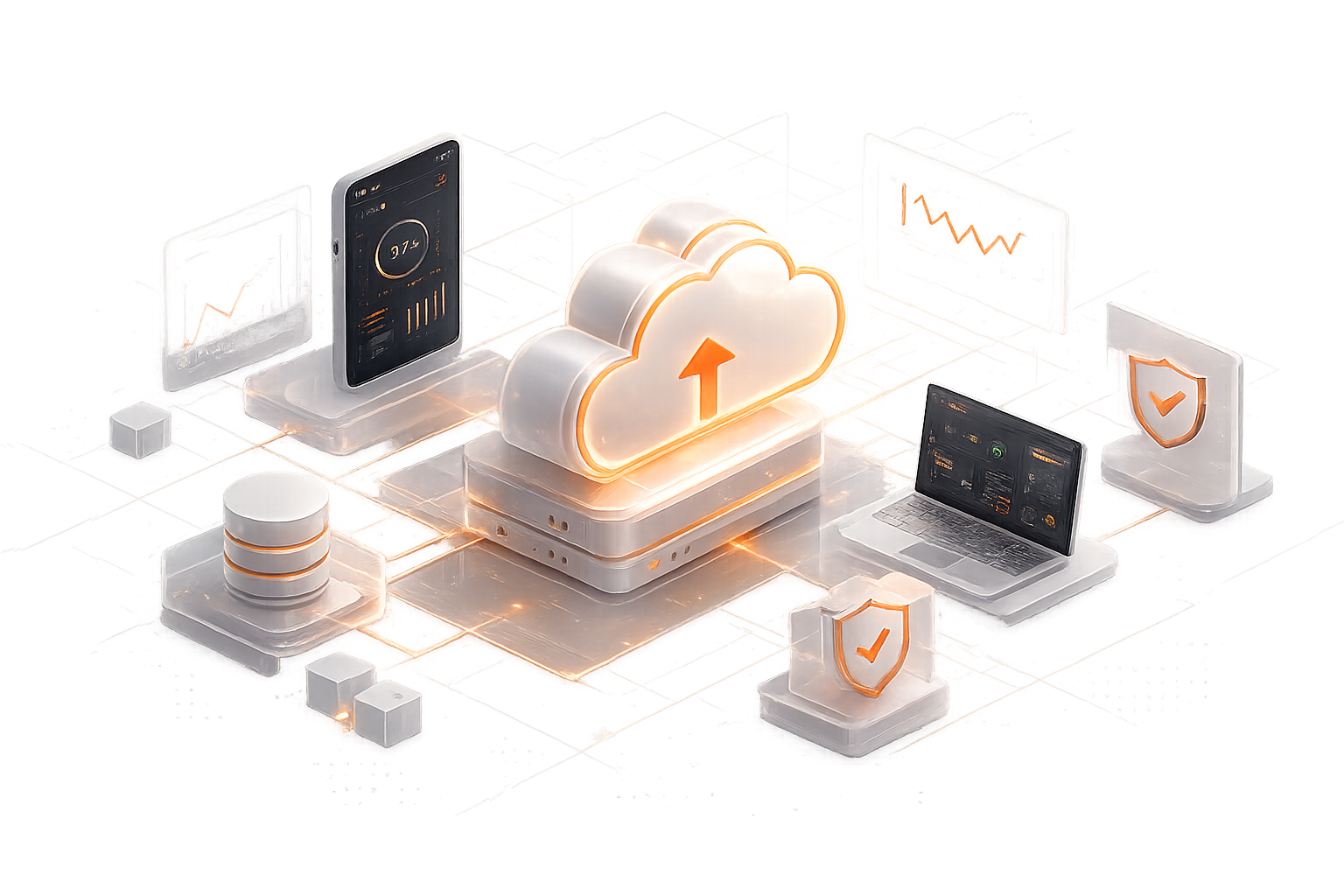
Cloud infrastructure scales with demand, while DevOps replaces manual deployment with automated, reliable delivery. Together, they give teams the agility to build and release software faster and more confidently.
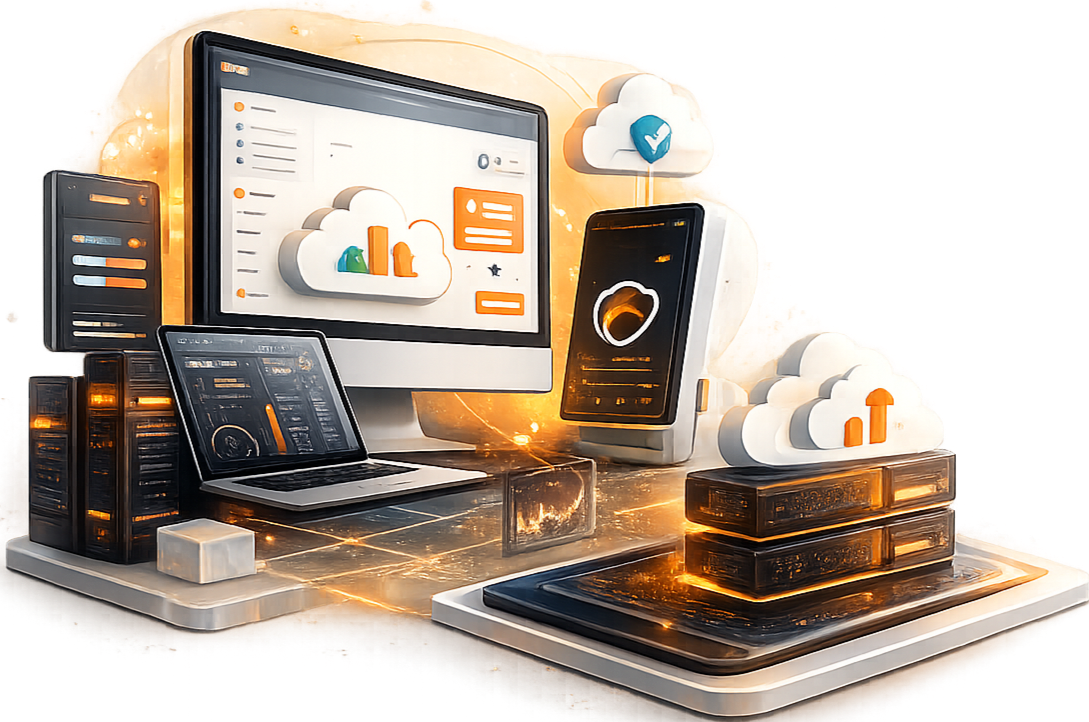
Cloud adoption enables businesses to handle demand spikes, recover quickly from failures, and release new features more frequently—protecting revenue, customer trust, and competitive advantage.

Our Cloud Consulting starts with your business goals. We assess your infrastructure, identify operational risks, and create a practical cloud strategy that improves performance without unnecessary cloud spending.
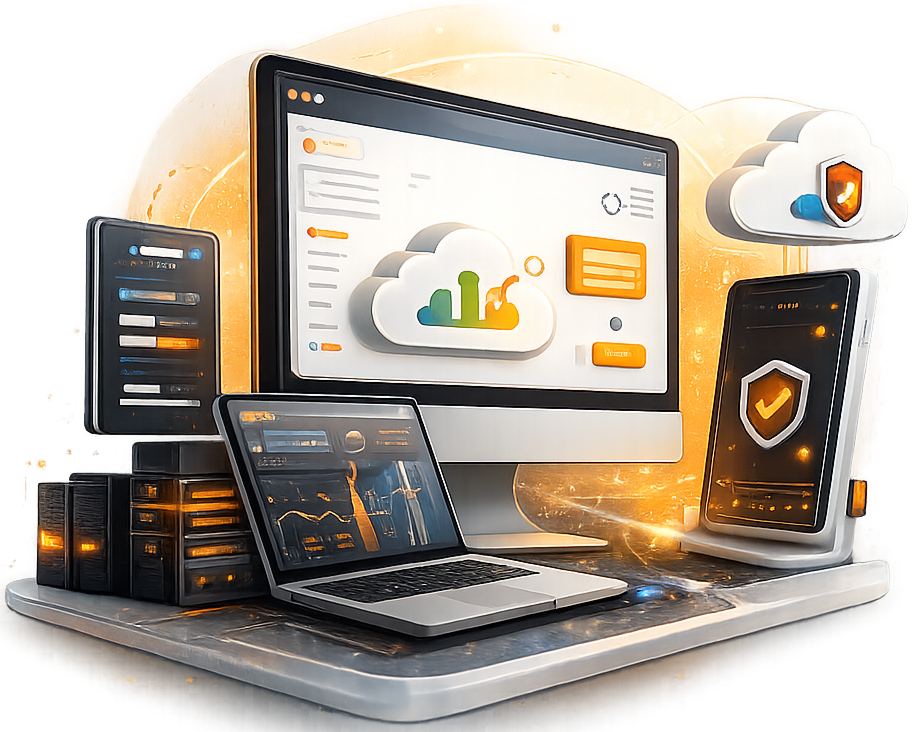
We plan migrations around dependencies, rollback procedures, and performance validation to minimize disruption and deliver a more resilient architecture.
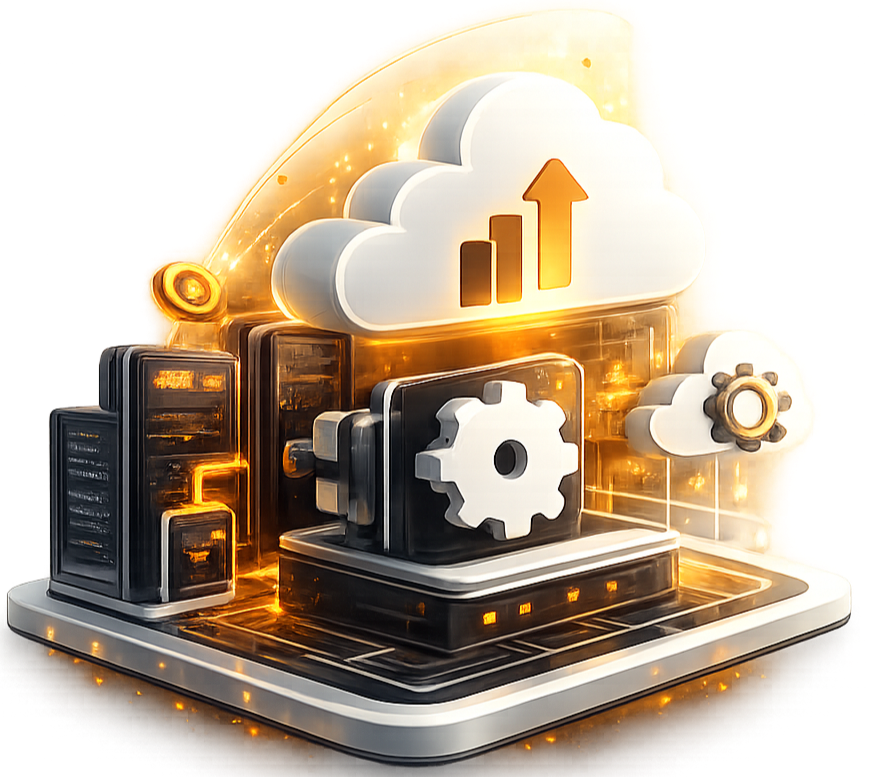
Our DevOps Services automate testing, validation, and deployment, replacing manual release cycles with faster, predictable, and reliable software delivery.
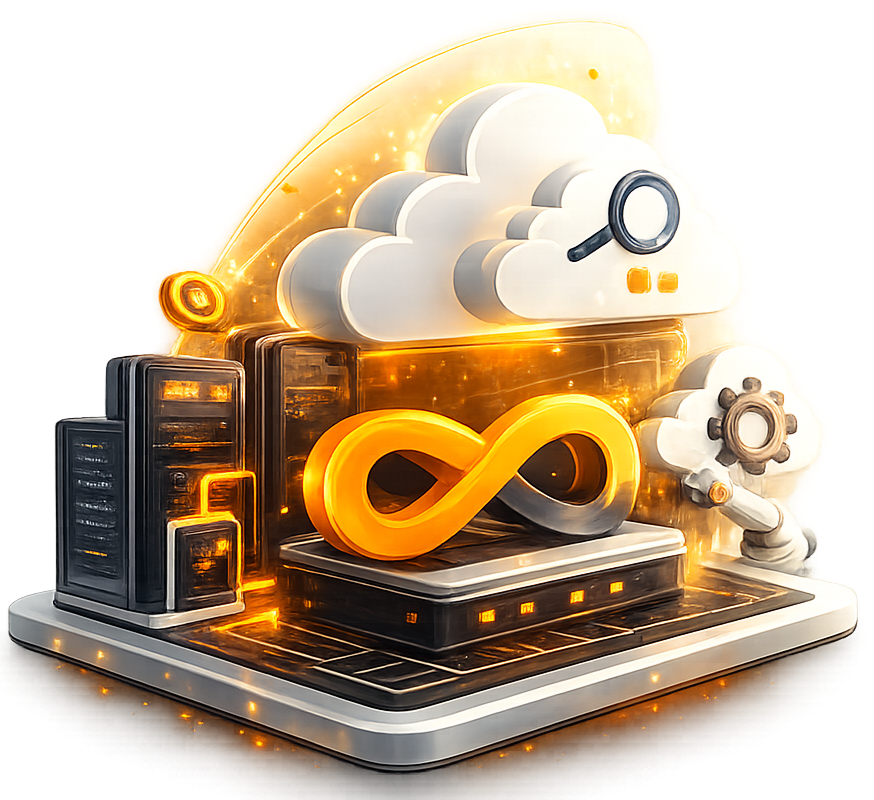
We continuously monitor system health, security, scaling, and performance to keep your infrastructure reliable, secure, and cost-efficient as your business evolves.

We design infrastructure around what your business needs to operate reliably and grow confidently.
We evaluate your operational requirements and growth objectives before recommending any infrastructure approach, ensuring cloud adoption solves actual business problems rather than creating new complexity.

Security and reliability are built into the architecture from the start—not applied as afterthoughts. We design environments that protect your data and maintain availability under the operating conditions your business actually faces.

Manual infrastructure management creates inconsistency and delays. We automate provisioning, deployment, scaling, and monitoring so that your infrastructure responds to operational demands without requiring constant human intervention.

We design infrastructure that scales with your business. Whether you are accommodating a planned product launch or an unexpected traffic spike, the architecture handles the change without requiring emergency intervention.

Cloud environments require active management to remain efficient and current. We monitor performance, identify optimization opportunities, and evolve your infrastructure as your business requirements and cloud technology both change.

We maintain active operational relationships with our clients—monitoring infrastructure health, managing security updates, and providing the ongoing technical guidance that keeps your cloud environment aligned with your business direction.
Hear from clients who’ve experienced remarkable transformations with Flipworks Technology.
Working with several word themes and templates the last years only can say this is best in every level use it for my company and the reviews that I have already are all excellent. Not only the design but the code

Working with several word themes and templates the last years only can say this is best in every level use it for my company and the reviews that I have already are all excellent. Not only the design but the code

Working with several word themes and templates the last years only can say this is best in every level use it for my company and the reviews that I have already are all excellent. Not only the design but the code

Working with several word themes and templates the last years only can say this is best in every level use it for my company and the reviews that I have already are all excellent. Not only the design but the code

Working with several word themes and templates the last years only can say this is best in every level use it for my company and the reviews that I have already are all excellent. Not only the design but the code

Working with several word themes and templates the last years only can say this is best in every level use it for my company and the reviews that I have already are all excellent. Not only the design but the code

I’ve tried several templates before, but this one stands out. It offers a perfect balance of aesthetics and performance. My team and I are extremely satisfied with how easy it is to use and customize. Truly a top-notch product!

This theme has exceeded my expectations in every way. The design is elegant, the code is clean, and the support is outstanding. It has helped my business grow, and the feedback from my customers has been overwhelmingly positive!

After using multiple website themes over the years, I can confidently say this is the best. It meets all my expectations in terms of design and functionality. My clients love the seamless experience, and I highly recommend it for anyone looking for quality
Got questions? We've got answers. Navigate the complexities of digital presence with ease.
Book a call with our friendly team to get all your questions and queries answered.
Cloud infrastructure replaces fixed physical capacity with on-demand resources that match your actual operational needs. The business benefits are operational rather than technical—faster software delivery, reduced risk of extended outages, the ability to scale during demand spikes, and the elimination of capital expenditure on hardware that sits underutilized most of the time.
For the majority of businesses, public cloud platforms offer the best combination of reliability, global reach, and cost efficiency. Private cloud is appropriate when regulatory requirements mandate data residency control or when specific security constraints make shared infrastructure unsuitable. We evaluate your compliance requirements and operational profile to recommend the right model.
Hybrid cloud combines on-premise infrastructure with cloud-based resources, allowing organizations to keep sensitive or latency-sensitive workloads on their own hardware while using cloud platforms for everything else. It is a practical transitional architecture for organizations with significant on-premise investments that are not yet ready or required to migrate fully.
The primary risks are data loss, extended downtime during cutover, performance degradation in the new environment, and security misconfigurations. We mitigate these through thorough pre-migration planning, dependency mapping, parallel running where appropriate, and comprehensive validation in staging environments before production workloads are moved.
Cloud platforms distribute infrastructure across multiple physical locations, meaning a failure in one data center does not bring down your entire system. Automated failover, geographic redundancy, and regular backup procedures ensure that your applications remain available even when individual infrastructure components fail.
Cloud-based disaster recovery allows your systems to restore from a secure backup environment within minutes rather than the hours or days required by traditional approaches. We design recovery architectures with defined recovery time and recovery point objectives, ensuring the recovery process actually meets your operational continuity requirements.
Security in a cloud environment requires active configuration and continuous monitoring. We implement network segmentation, identity and access management, encrypted data storage and transmission, and real-time threat detection. Security posture is reviewed regularly rather than treated as a configuration that is set once and left unchanged.
CI/CD pipelines reduce the risk and effort associated with each software release. When deployment is automated and tested at every stage, your teams can release more frequently with greater confidence—catching defects earlier, shortening the time between a product decision and a live update, and reducing the anxiety associated with large, infrequent releases.
We implement observability stacks that monitor application response times, infrastructure resource utilization, error rates, and system availability in real time. Alerting is configured to notify the right people before performance issues become customer-affecting failures, rather than after.
Yes. Cloud costs tend to grow when resources are over-provisioned, when unused environments are left running, or when architecture decisions made early in the cloud journey are not revisited as usage patterns mature. Regular optimization reviews right-size resources, eliminate waste, and ensure your cloud spend is producing proportionate business value.
We offer structured managed services that cover continuous monitoring, security patch management, infrastructure scaling, incident response, and regular strategic reviews. Your infrastructure is treated as a living operational environment that requires active management rather than a project that concludes at go-live.
We start with an infrastructure assessment that maps your current architecture, identifies operational risks and constraints, and establishes the business objectives you need the new environment to support. This produces a clear, prioritized roadmap that your leadership can review and approve before any migration or implementation work begins.
Have a project in mind? Contact us for expert design and development solutions. Let's discuss how we can help grow your business.